Fraud Prevention at Scale
Rebuilding Sift's console for new fraud verticals — one system, many surfaces.
The problem
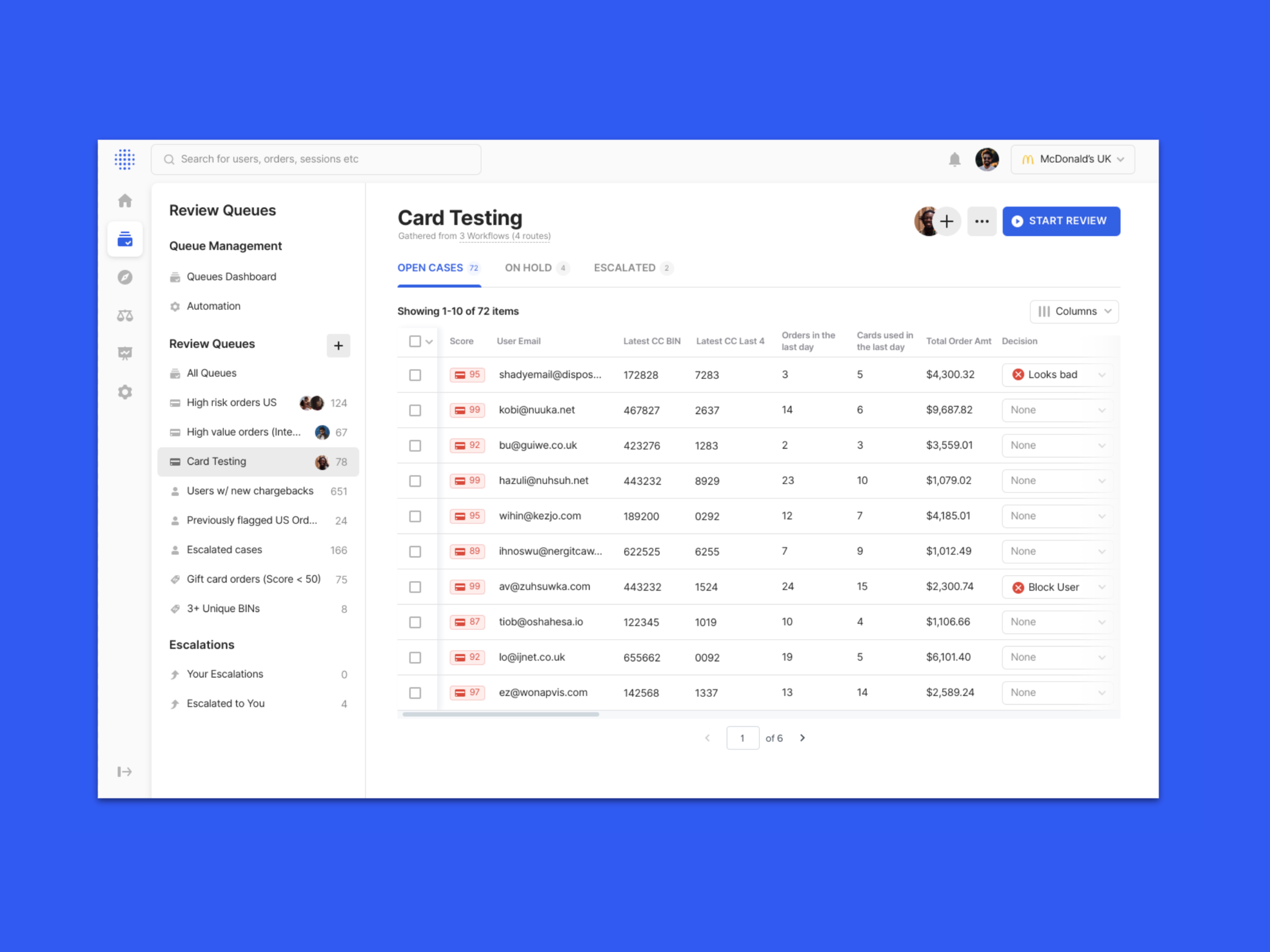
Sift scores fraud risk across thousands of signals per transaction, login, or order. The console was built for e-commerce, but leadership wanted to expand into airlines, fintech, and iGaming — verticals with different fraud patterns, different investigator workflows, and different definitions of a bad outcome.
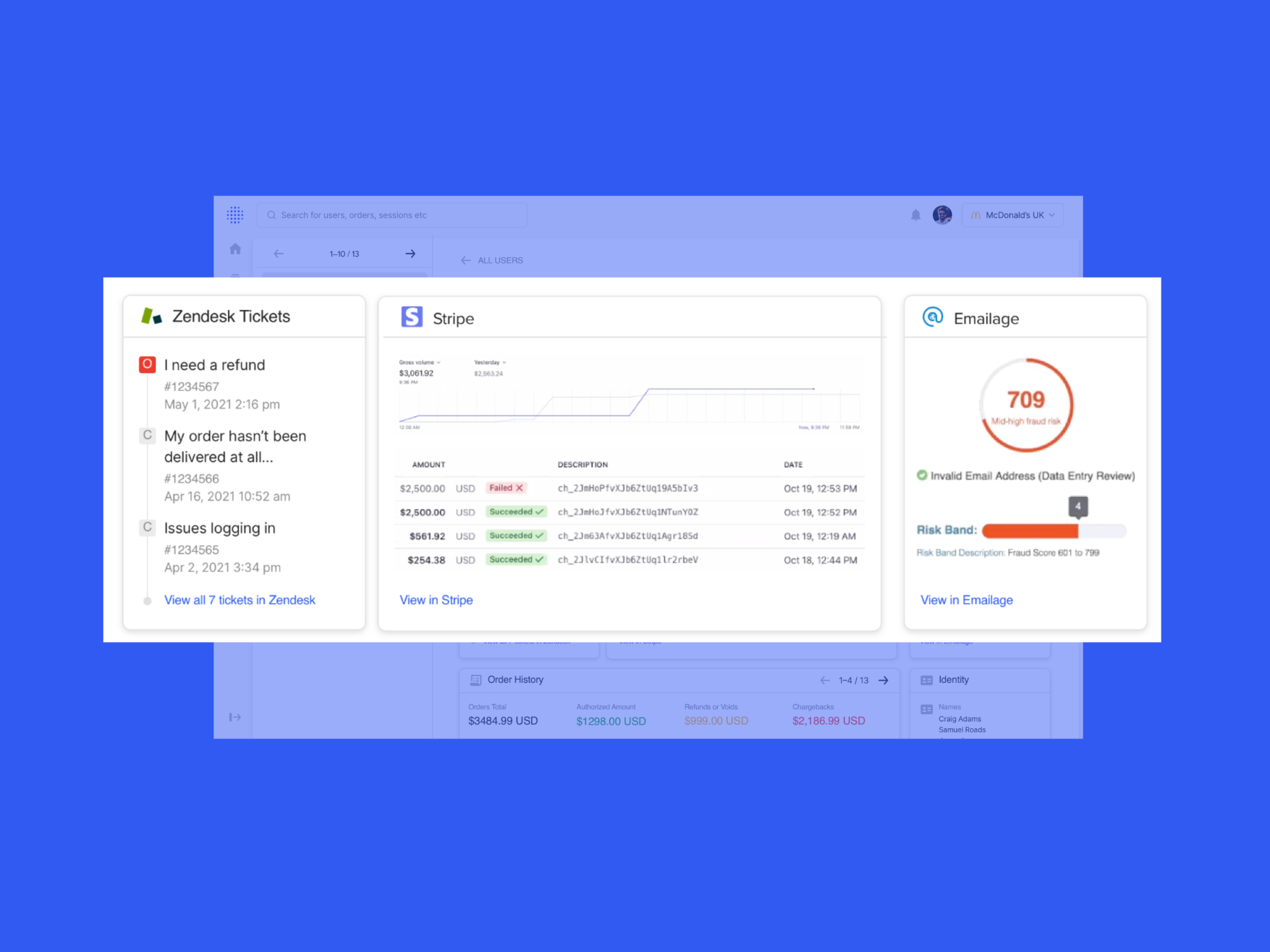
Research surfaced the harder problem underneath: fraud agents don't live in one tool. They work Sift alongside internal systems, case managers, and spreadsheets. Expanding vertically meant redesigning for a workflow we didn't fully control.
What I owned
I led a team of five senior designers across discovery, systems, and delivery. I ran the research program, set the design direction, and made the calls on where we standardized versus where each vertical got to diverge. I also ran the critique process that kept five designers shipping to one bar.
The approach
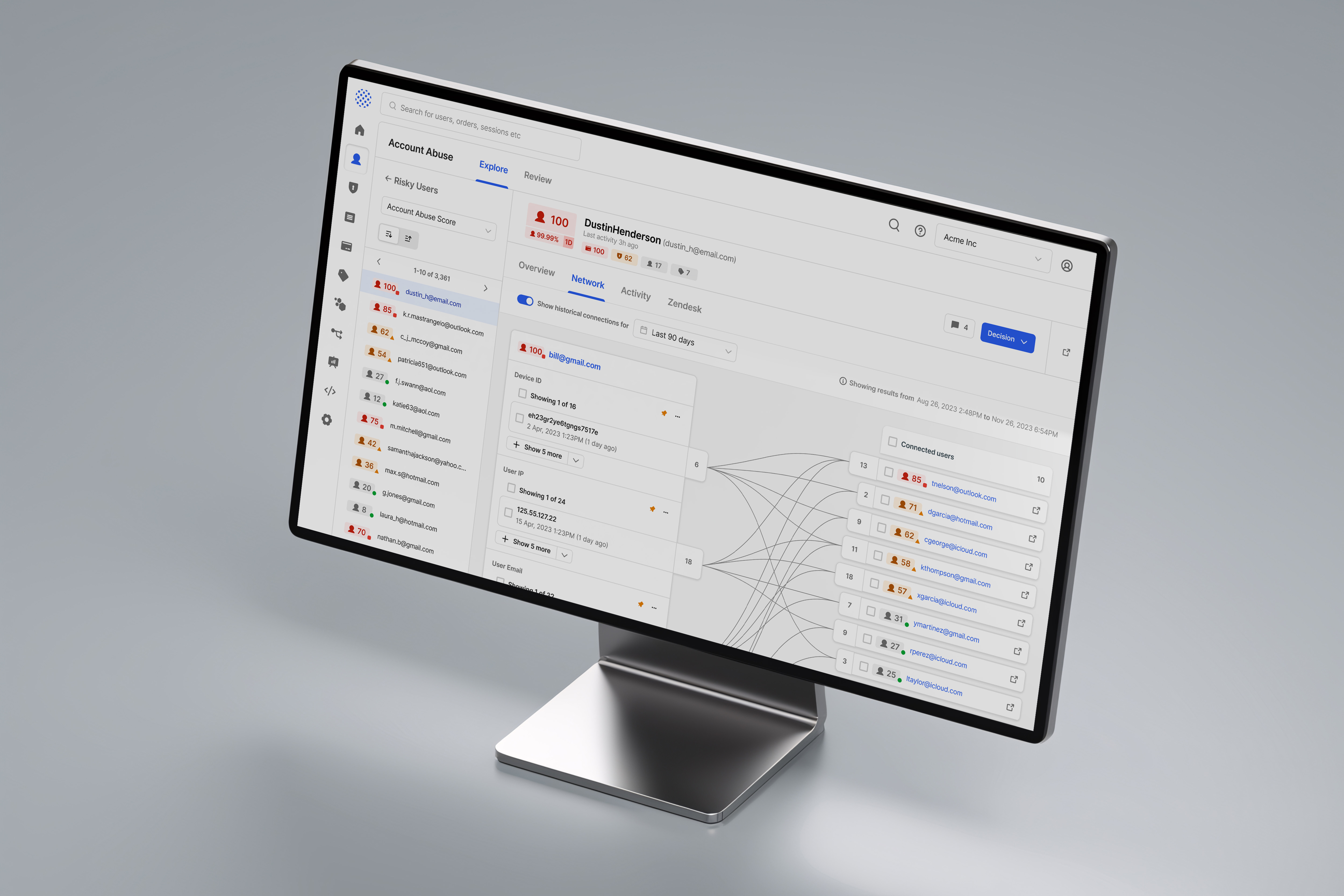
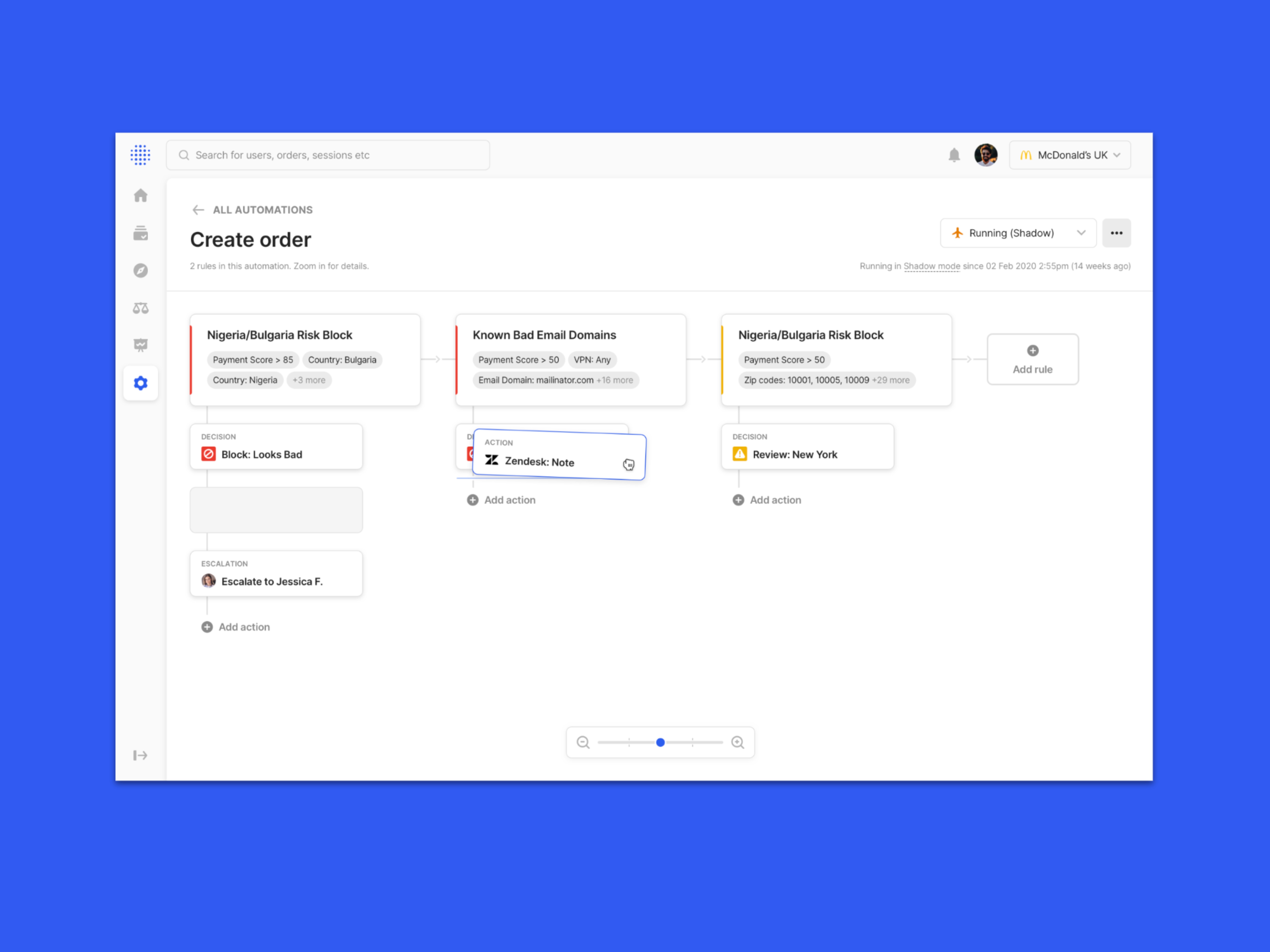
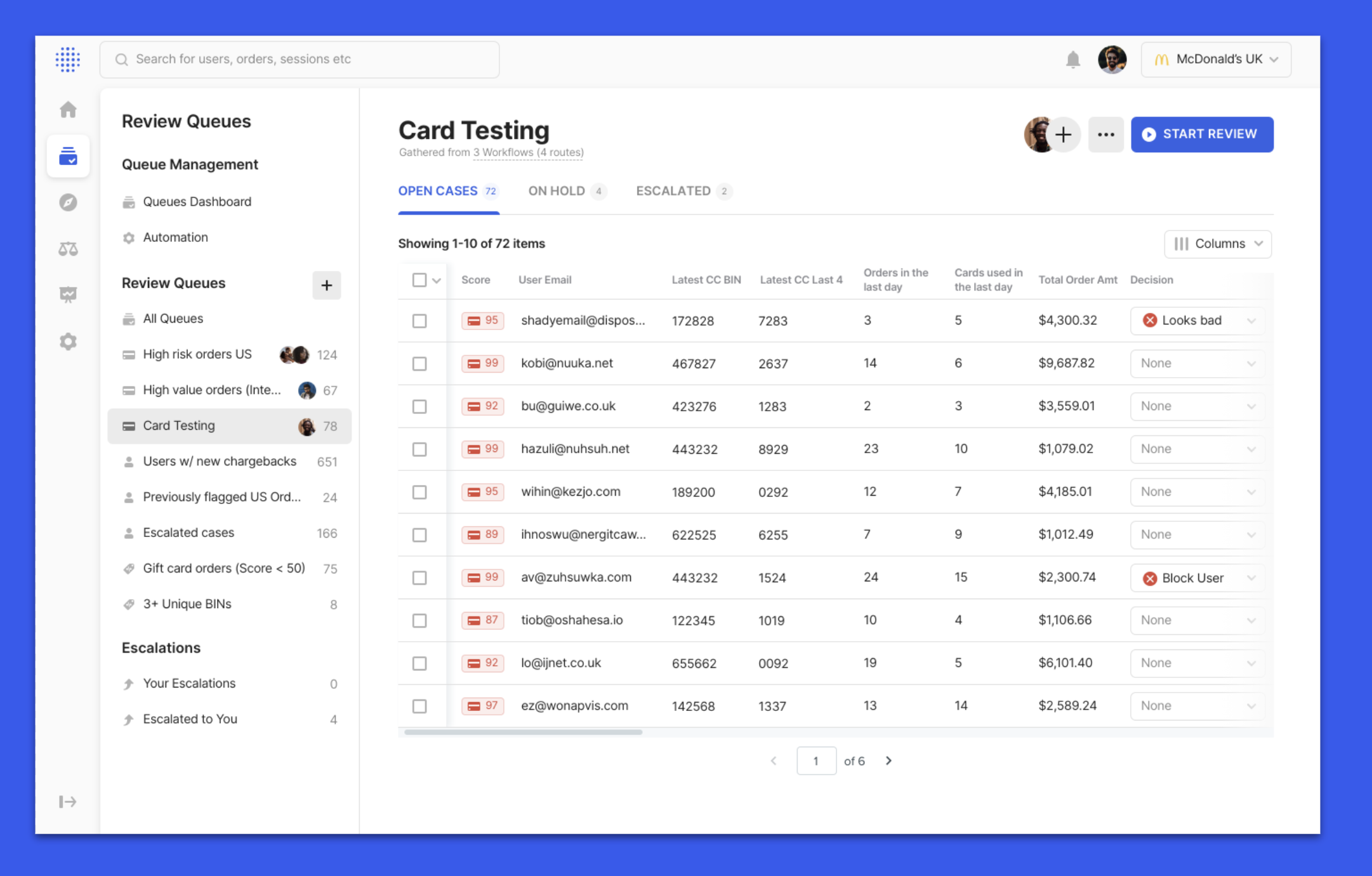
Rather than design three vertical-specific consoles, we built a WCAG-accessible framework of widgets and patterns any Sift dev team could assemble into a vertical without inventing new UI. One system, many surfaces.
The hard part
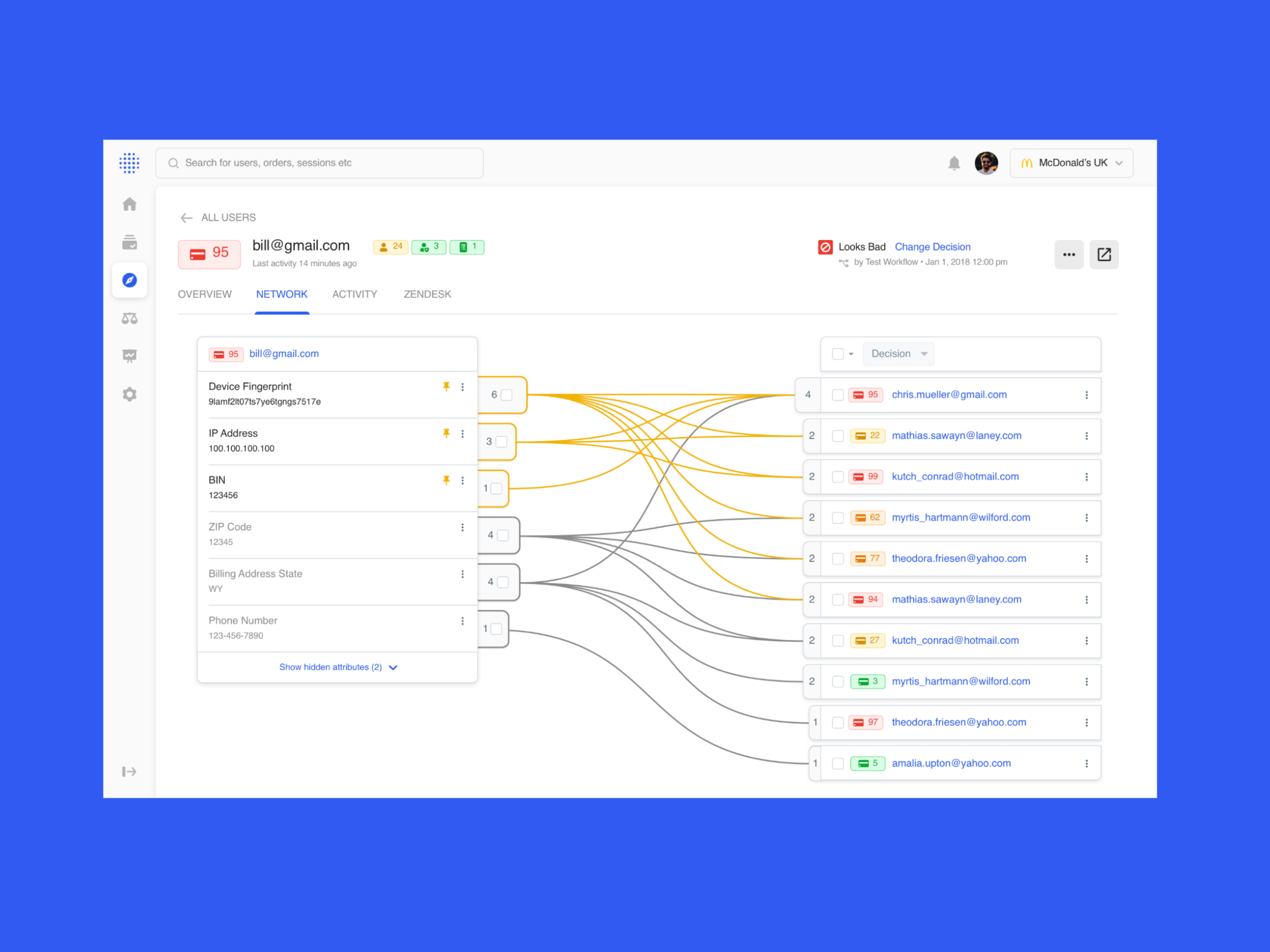
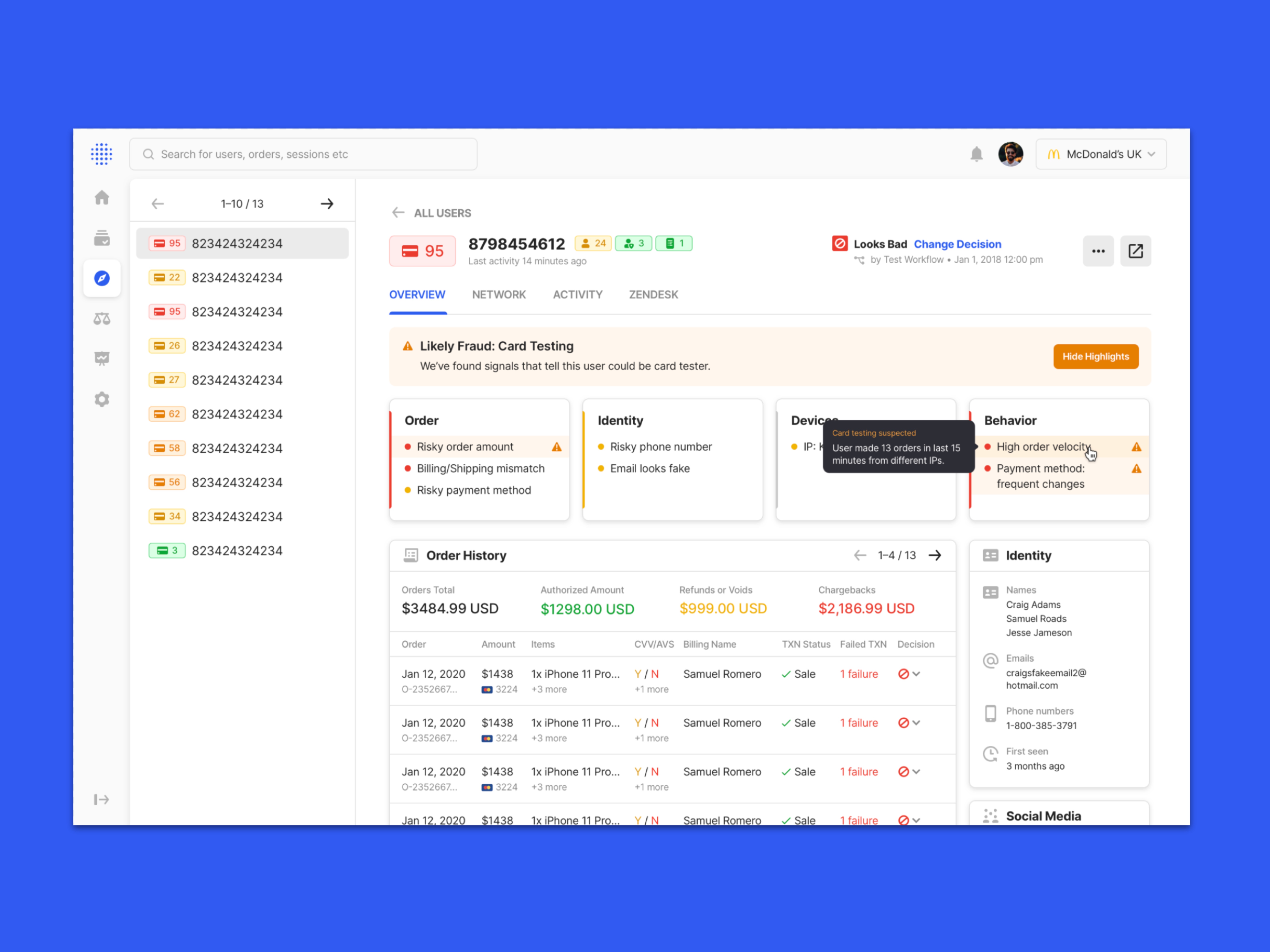
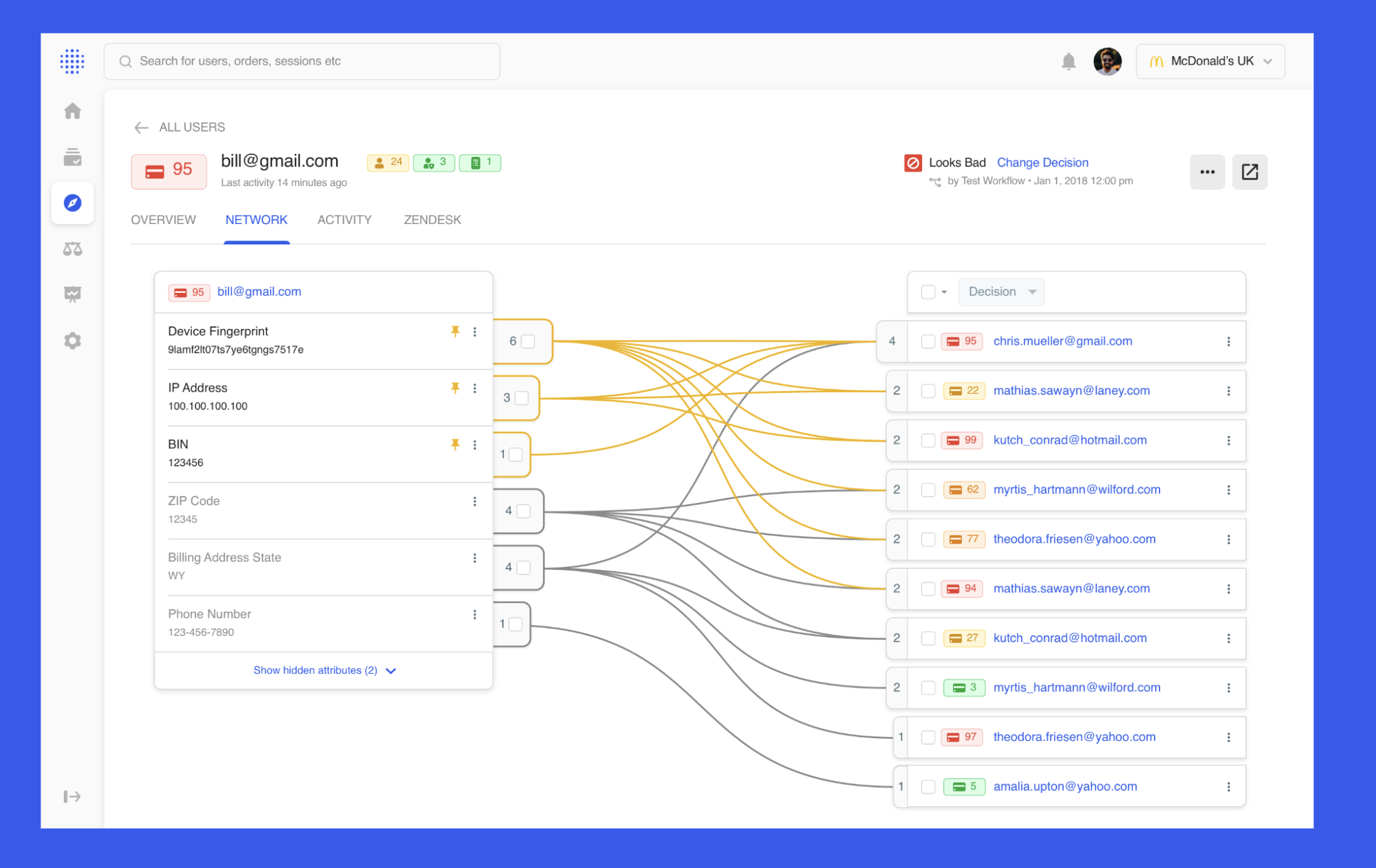
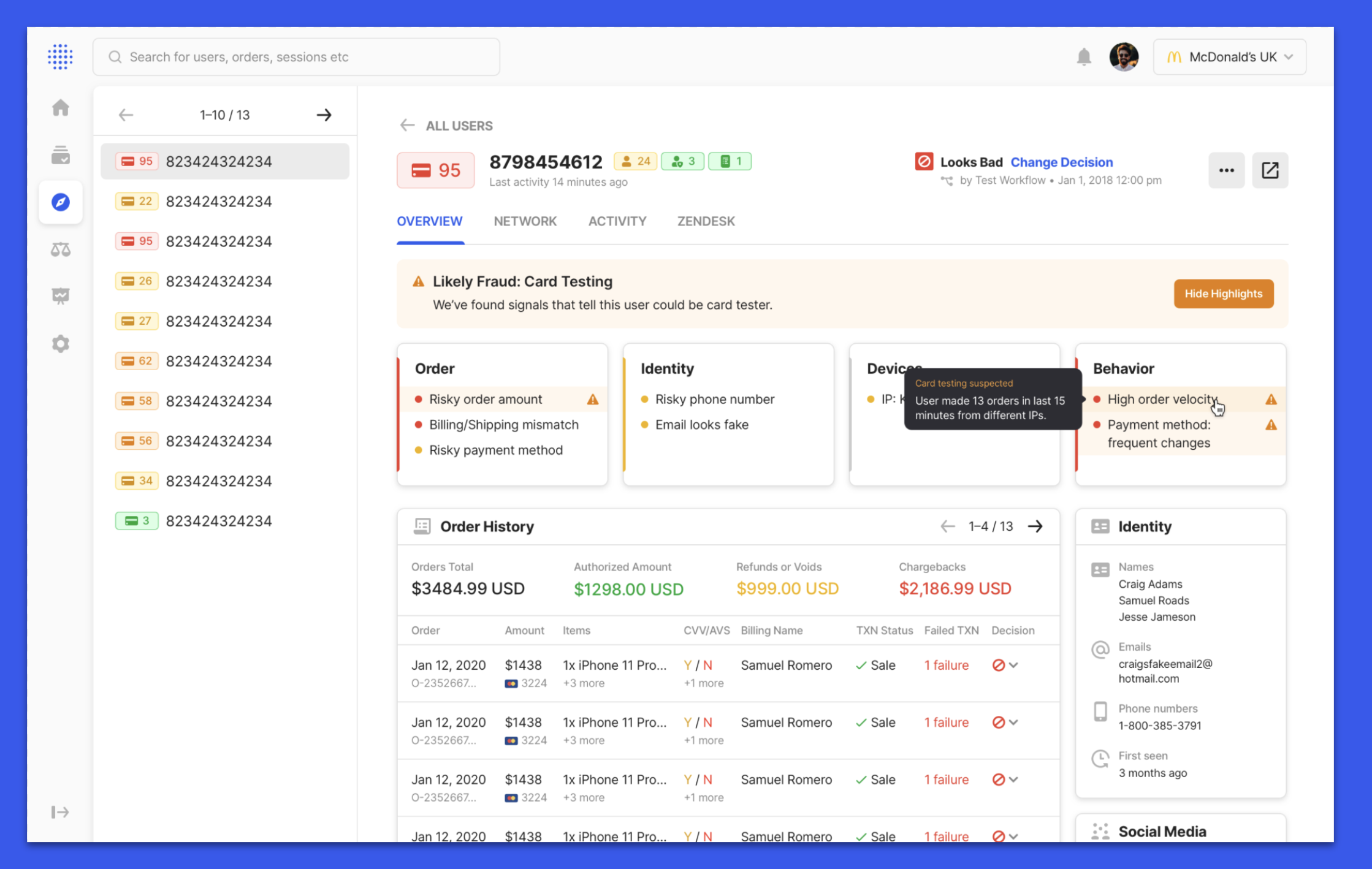
Fraud investigation is judgment work under time pressure — agents decide with incomplete information and real money on both sides of a wrong call. Three pieces addressed that directly: a signal severity system that made risk legible at a glance, smart drill-downs that let agents follow a thread without losing context, and AI helpers that surfaced relevant context and suggested next actions.
The AI decision was the one I'd defend hardest. We built it to compress the time between question and evidence — not to make the call. In a domain where a false positive costs a customer and a false negative costs money, an agent who can't explain their reasoning is worse than a slower one.
Outcomes
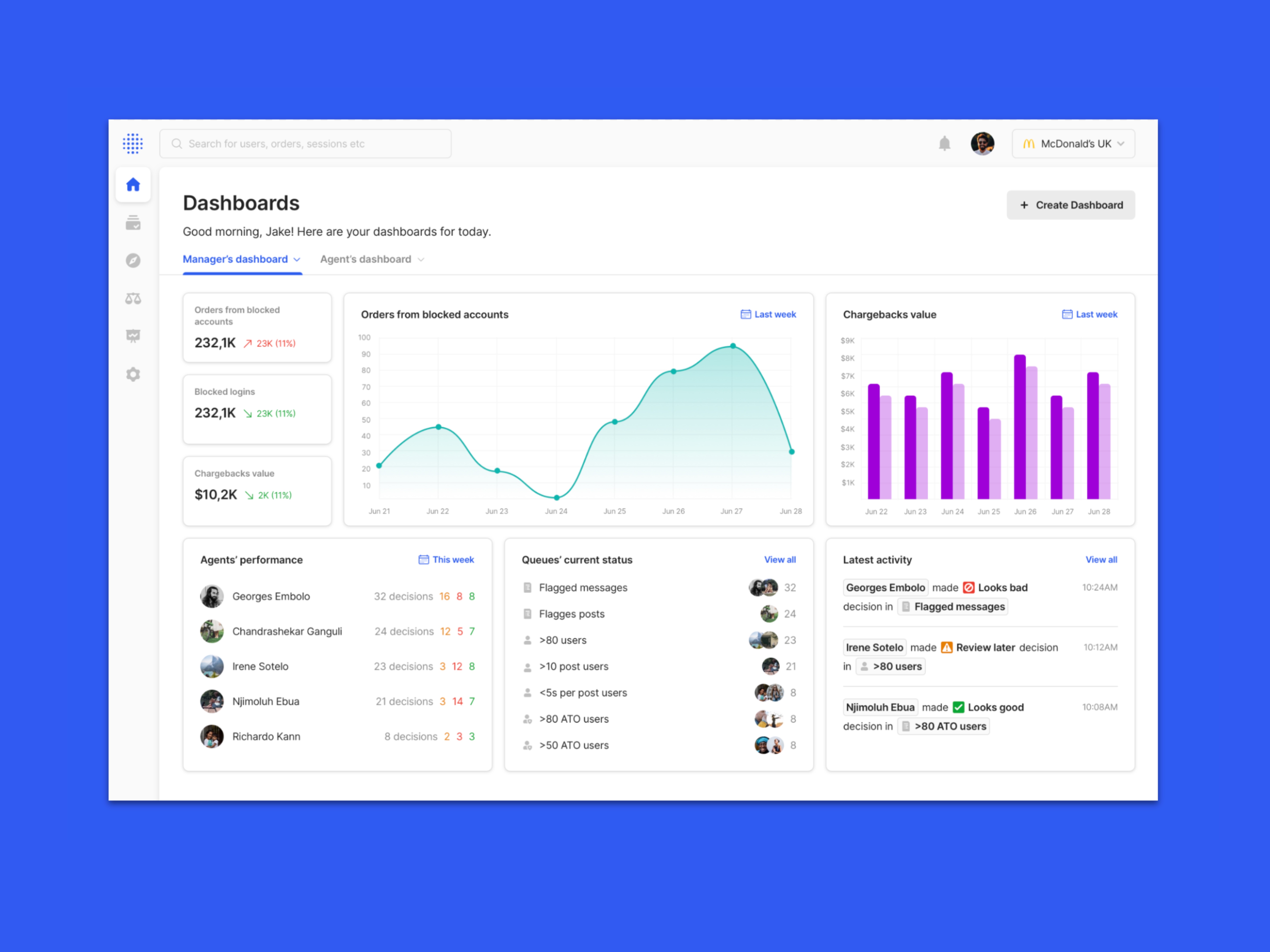
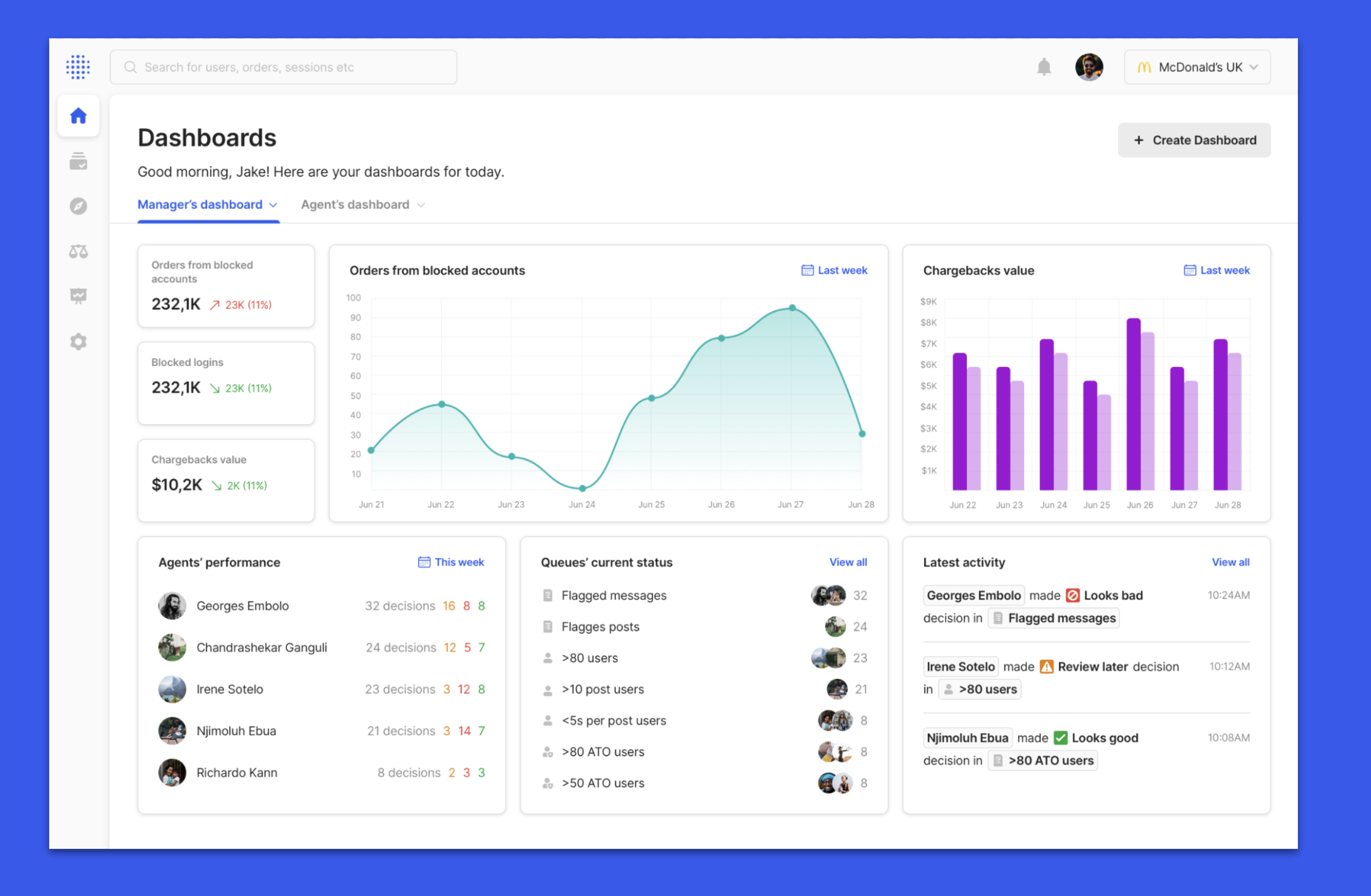
The redesign shipped with the Focus design system, a rebuilt console, a new dashboard as the marquee feature, and WCAG 2.0 compliance across the platform.
Accessibility turned out to be the commercial unlock. Regulated enterprise buyers — McDonald's among them — required WCAG 2.0 to sign at all, so compliance moved from a quality concern to a deal prerequisite. The framework opened those conversations.
Vertical expansion got cheap. Because new surfaces assembled from existing patterns rather than net-new UI, Sift moved into payment service providers and crypto/fintech on the same foundation. The roadmap we built alongside the system held for three years — a reasonable proxy for whether the architecture was right, since roadmaps that survive contact with three years of shifting priorities usually mean the underlying model was sound.
NPS reached 75 the following quarter, and roughly 80 quality-of-life items came out of launch, most of which shipped.
What it taught me
I went in treating WCAG as a quality bar and came out treating it as market access. Once we understood that regulated buyers couldn't sign without it, accessibility stopped being something I had to defend for its own sake and became the easiest business case I've ever made. I've argued for design work differently since — not "this is better," but "this is what makes the next deal possible.