AI Interview Preps
Interview prep that knows your background, the role, and the company — not a list of common questions.
The problem
AI interview prep is a crowded category and most of it is the same product: paste a job description, get back questions any candidate could have found on Glassdoor. The output is fast, plausible, and useless — because interview prep is only valuable to the degree it's about you going after that role at that company.
I built Quiver while running my own search, which is how the problem got specific. The generic prep tools didn't fail because their models were weak. They failed because they knew nothing about the person using them.
The bet
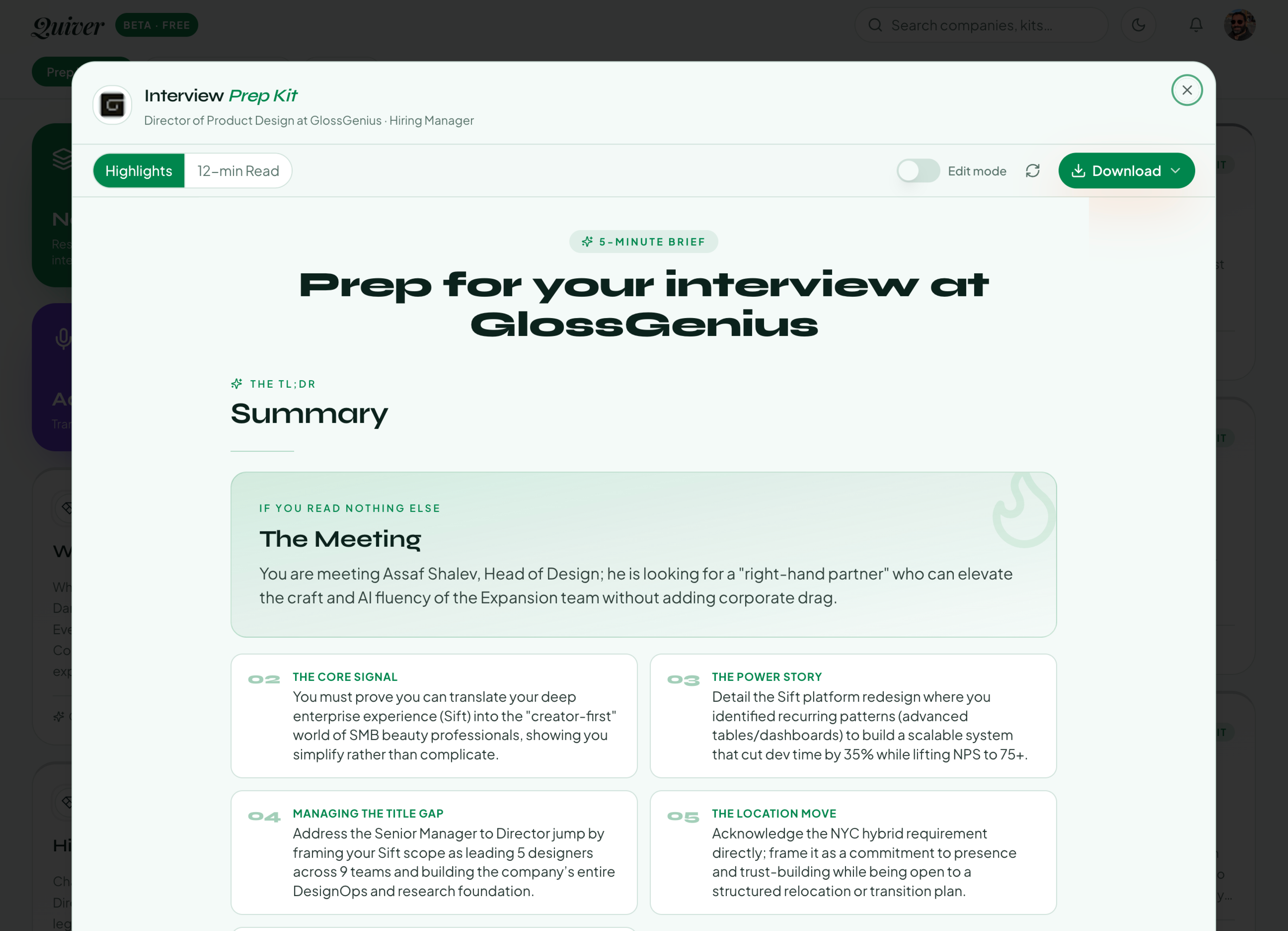
Context is the entire product. Quiver builds a private roster of knowledge about each user — background, prior roles, the specific role and company they're targeting — and every artifact generates from that. Nothing generic goes out.
That decision cascades into everything else. Onboarding has to earn context without feeling like a form. Prompts have to be staggered rather than fired at once, so each pass builds on what came before instead of asking the model to hold everything at the same time. And the output has to arrive fast enough to be useful the night before an interview, which is a real constraint when you're chaining calls.
The design
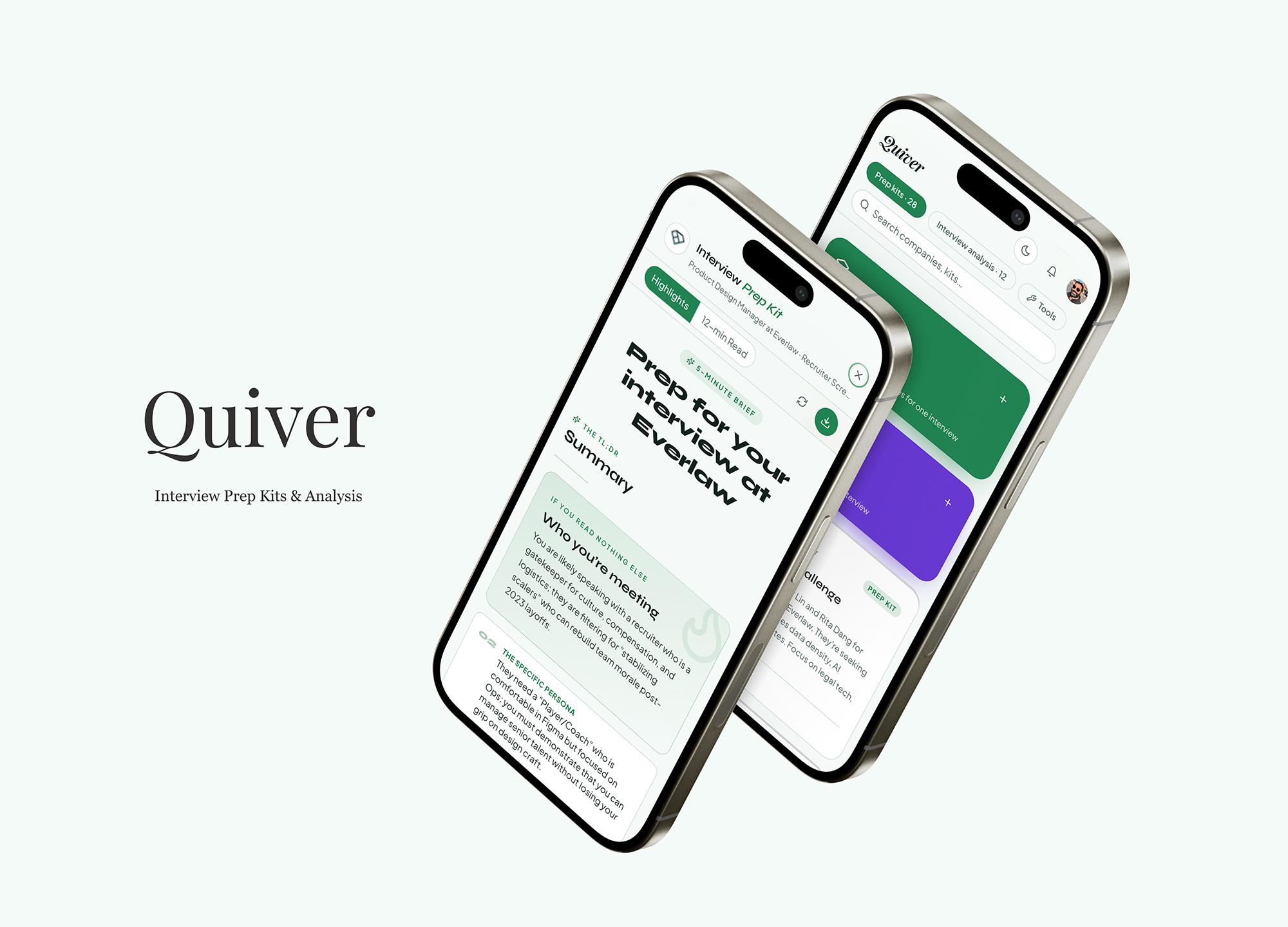
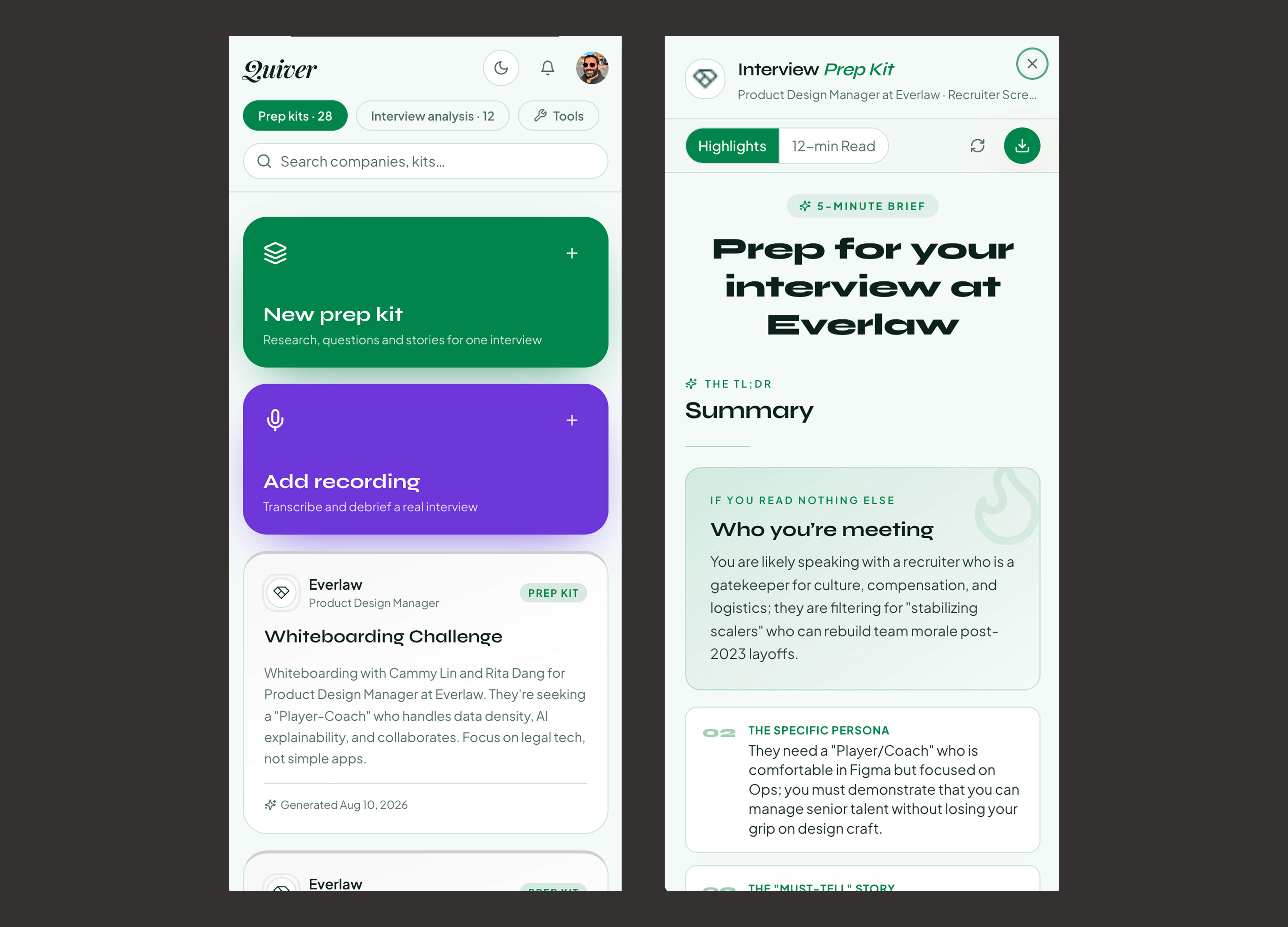
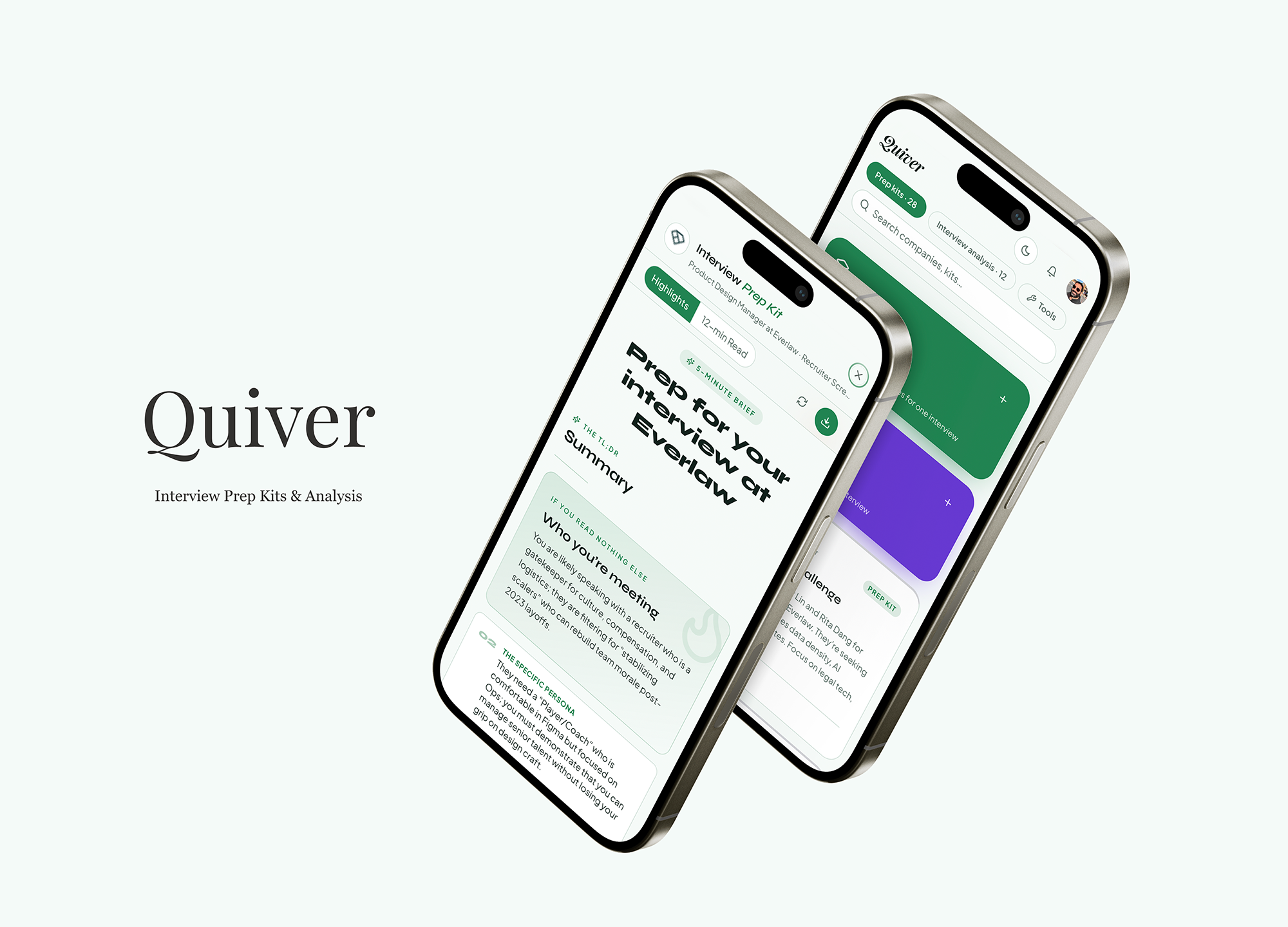
Mobile-first, and honed to one task: get prepped quickly. Most competitors are desktop dashboards that assume you'll sit and study. Actual prep happens in the twenty minutes before a call, on a phone, in a parking lot.
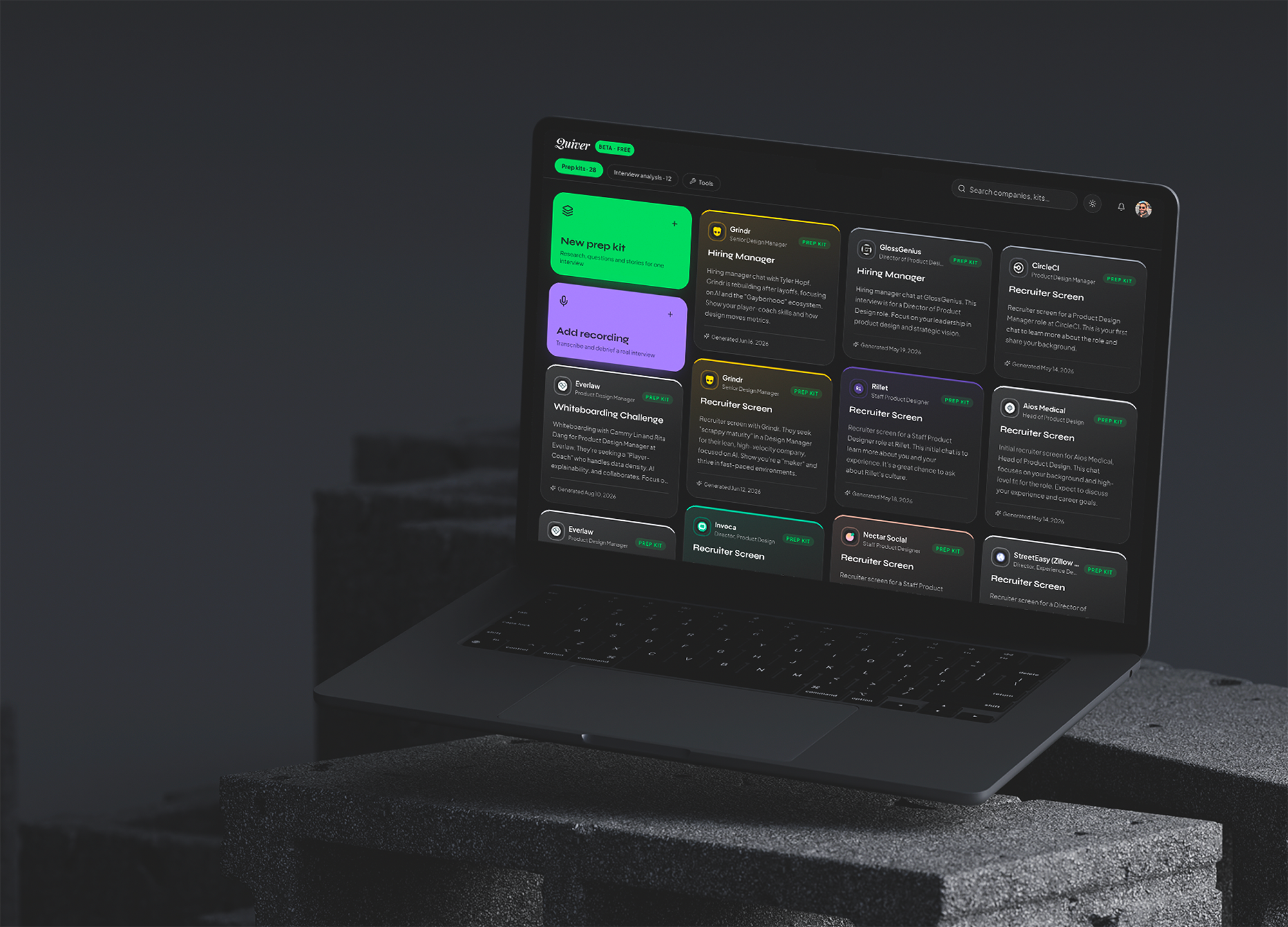
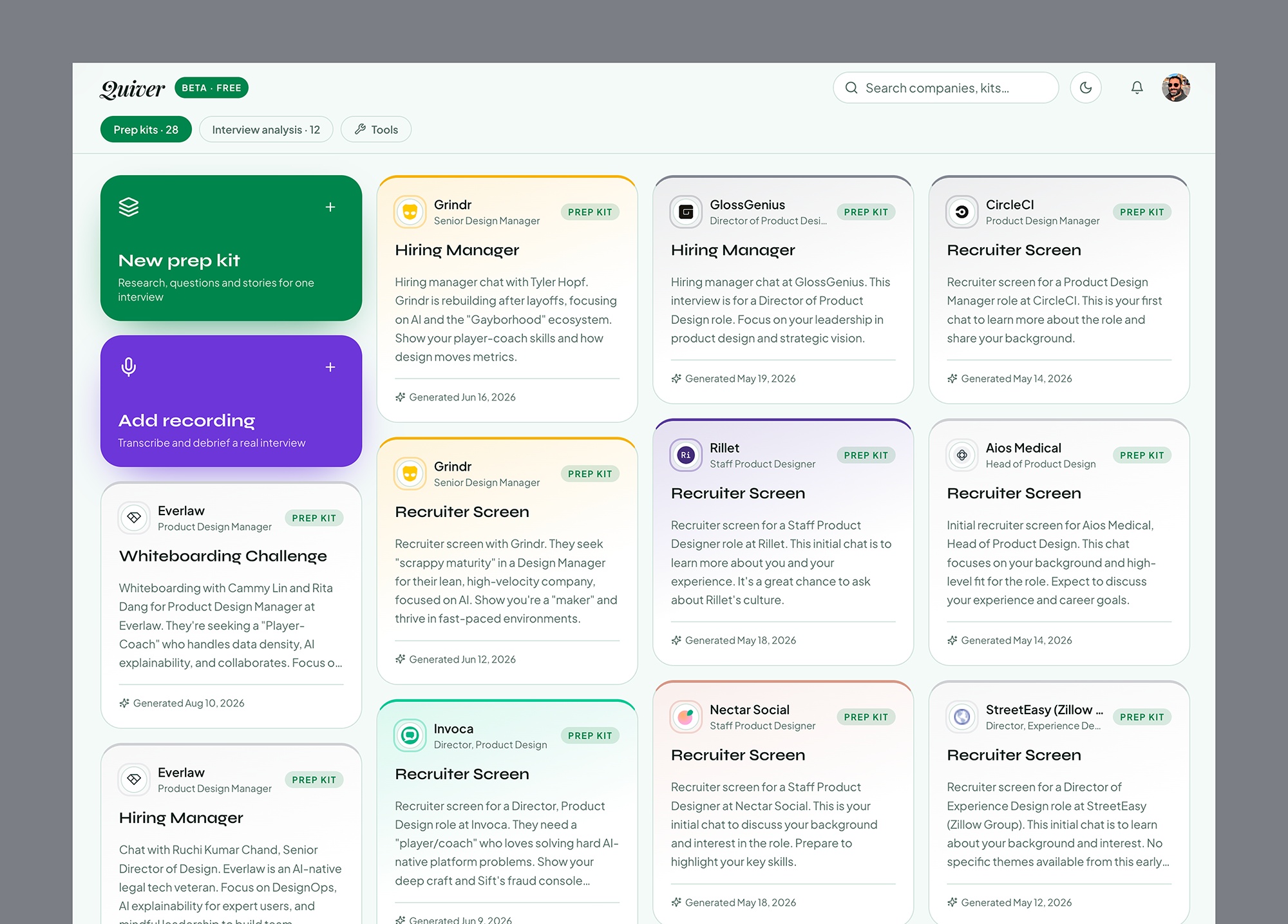
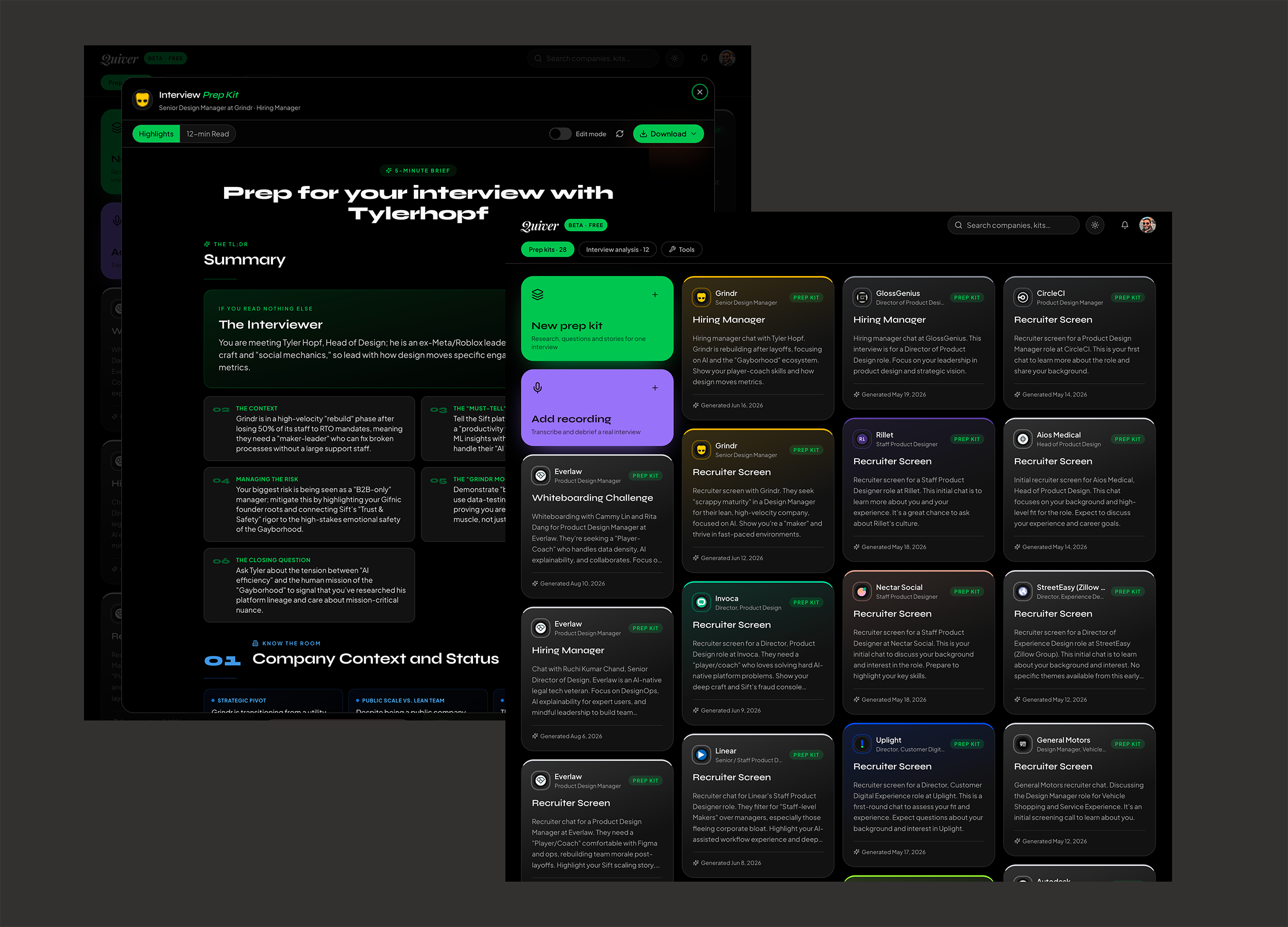
Prep kits and post-interview analysis are designed as infographics rather than documents — scannable under time pressure, structured so you can find the one thing you need without reading it all again. The second half of the product is the analysis: what happened in the room, what to change before the next one. That's the part that turns a single prep tool into something you come back to.
What I did
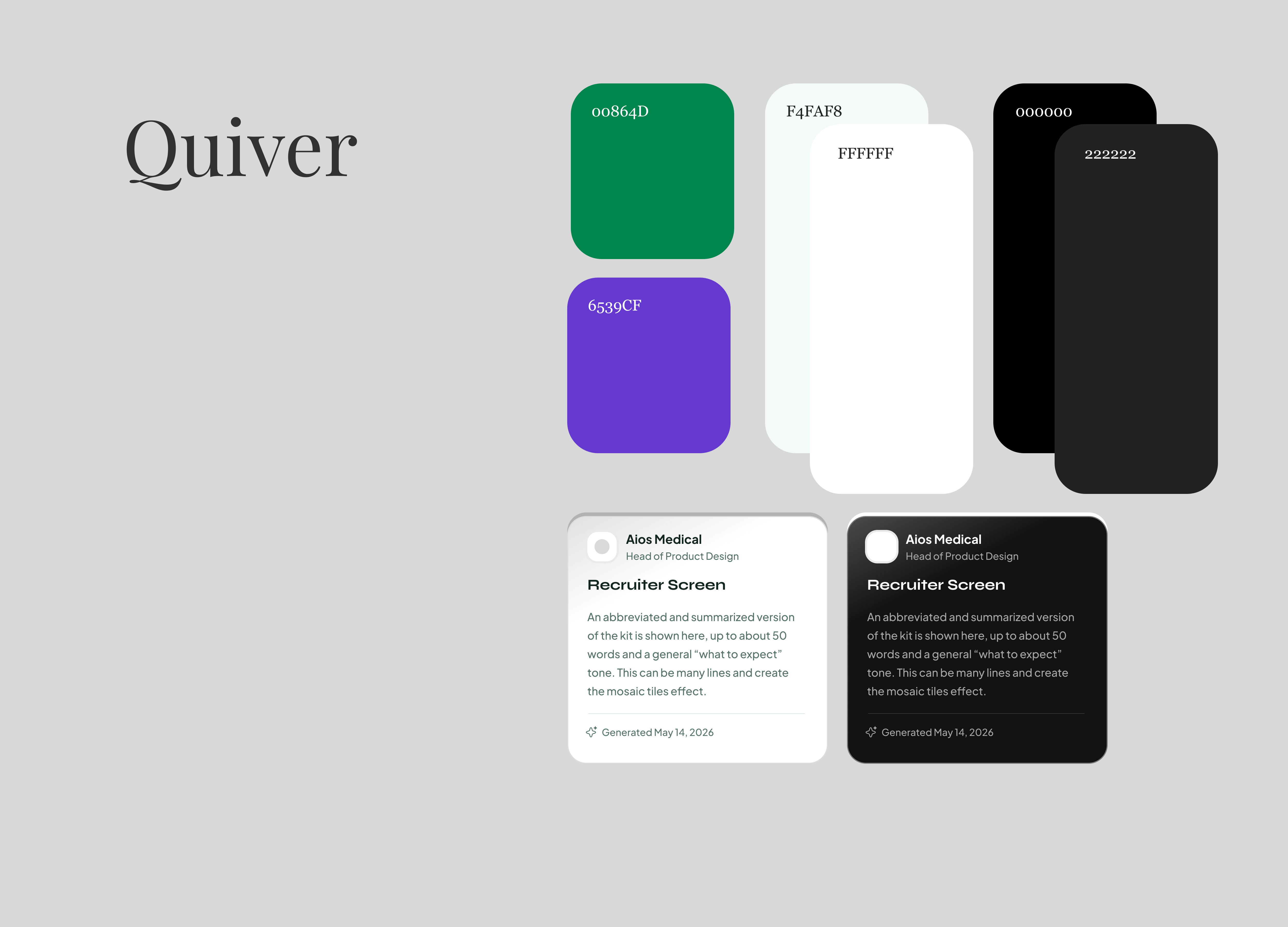
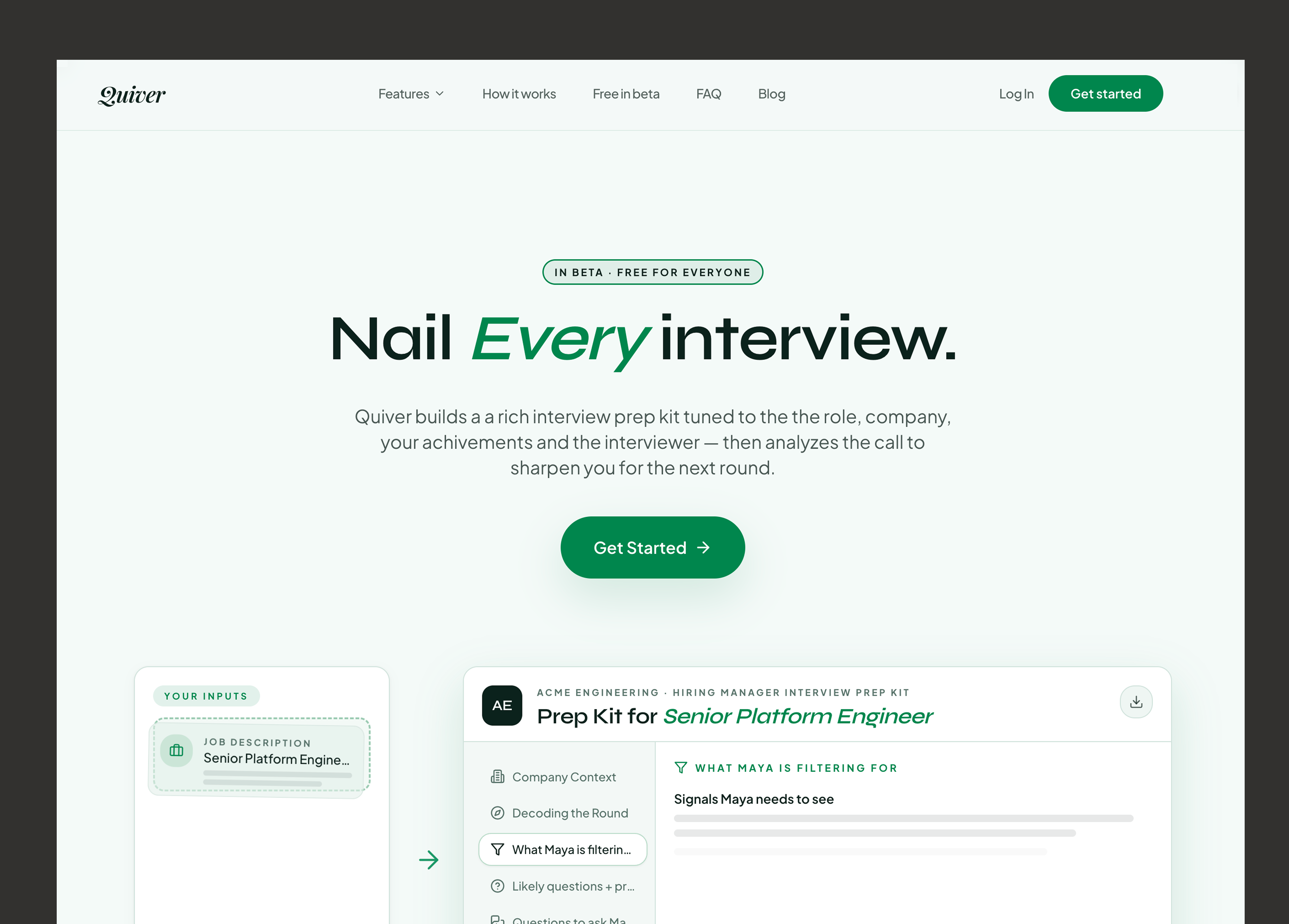
All of it. Product design, the prompt architecture and staggering, the admin tooling behind it, the brand, the website, and the collateral. This is the page where the founder work is the point: a designer who can take something from positioning through prompt engineering to a shipped product is a different asset to a team than one who can only take a spec to a mockup.
What I took from it
Two things carried straight back into how I lead.
Prompt design is product design. Deciding what the model knows before it answers, and in what order, is the same work as deciding what a screen shows and when — and it's now a craft skill I expect design teams to have an opinion about, not something we hand to engineering.
And building the whole stack alone recalibrated my sense of cost. I've spent years estimating what things take from one side of the handoff. Doing every part of it myself changed which battles I think are worth fighting.
Live at getquiver.ai.