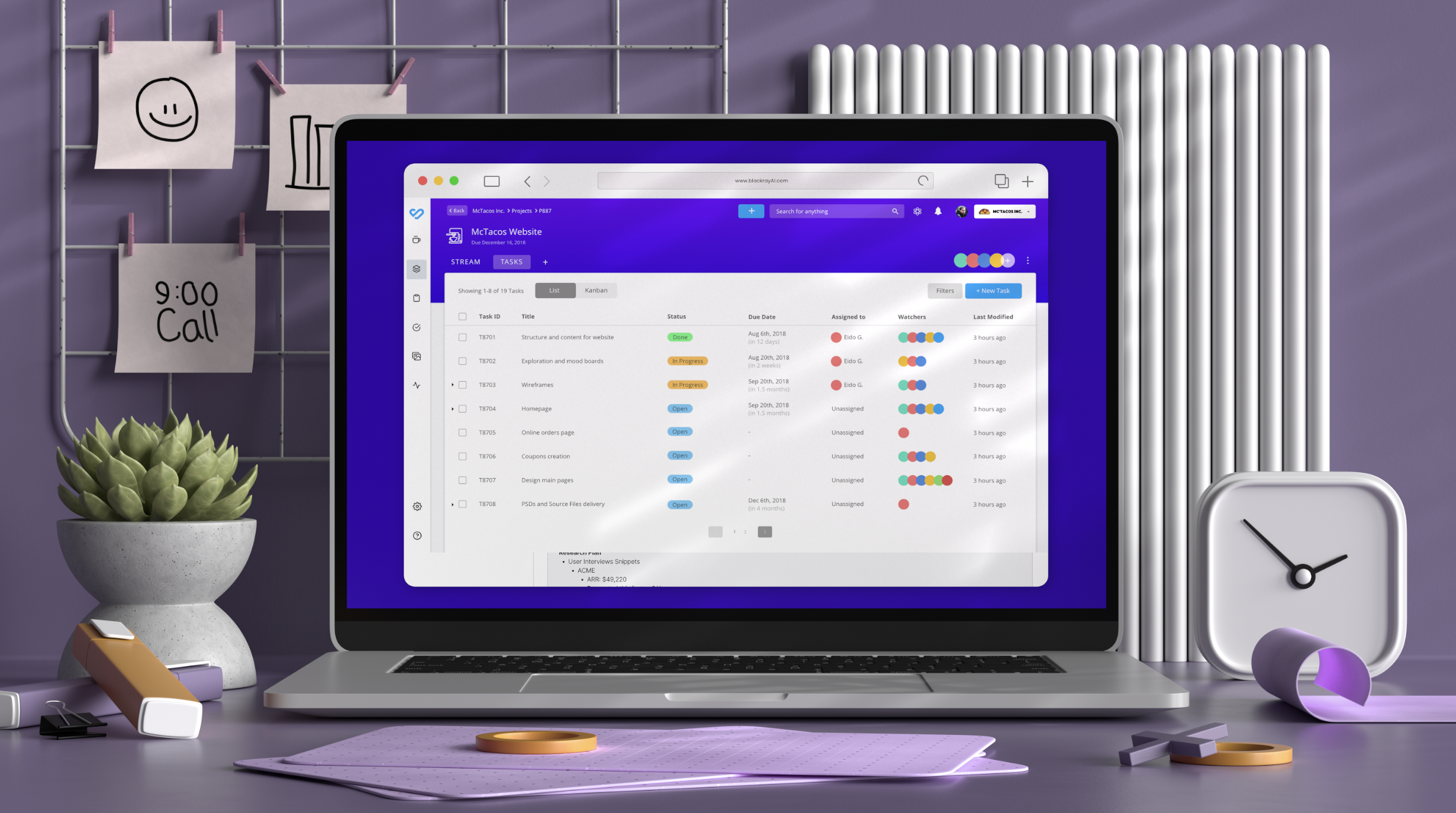
Adaptive project management
Creative teams don't work one way. A project model that reshapes around the work inside it.
The insight
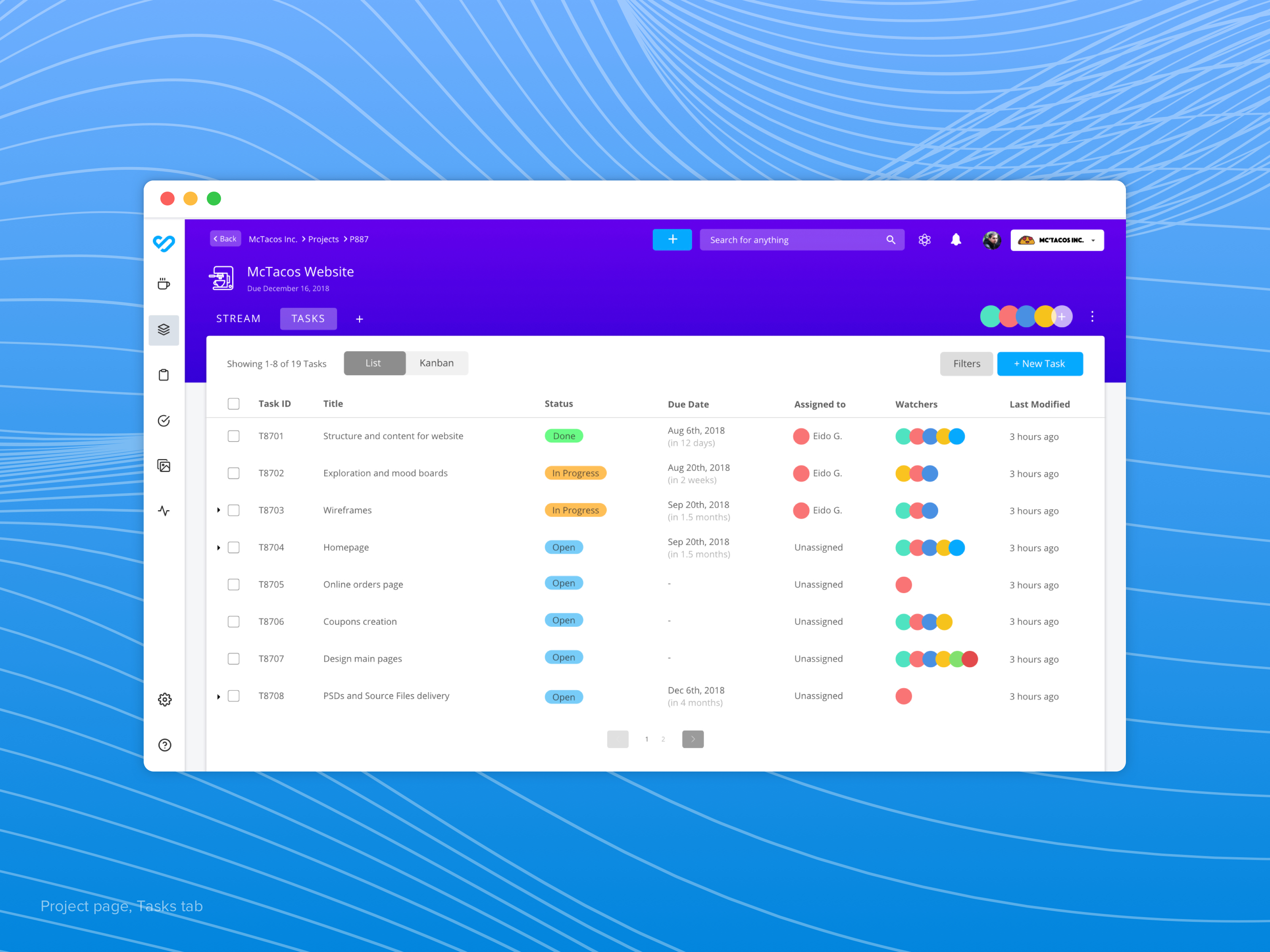
A copywriting task and a web design task are both "tasks," and Workstream treated them identically. Research I ran with creative teams showed that was the core problem.
Three project archetypes came out of that work, and they didn't sit on a spectrum of size — they were structurally different kinds of work:
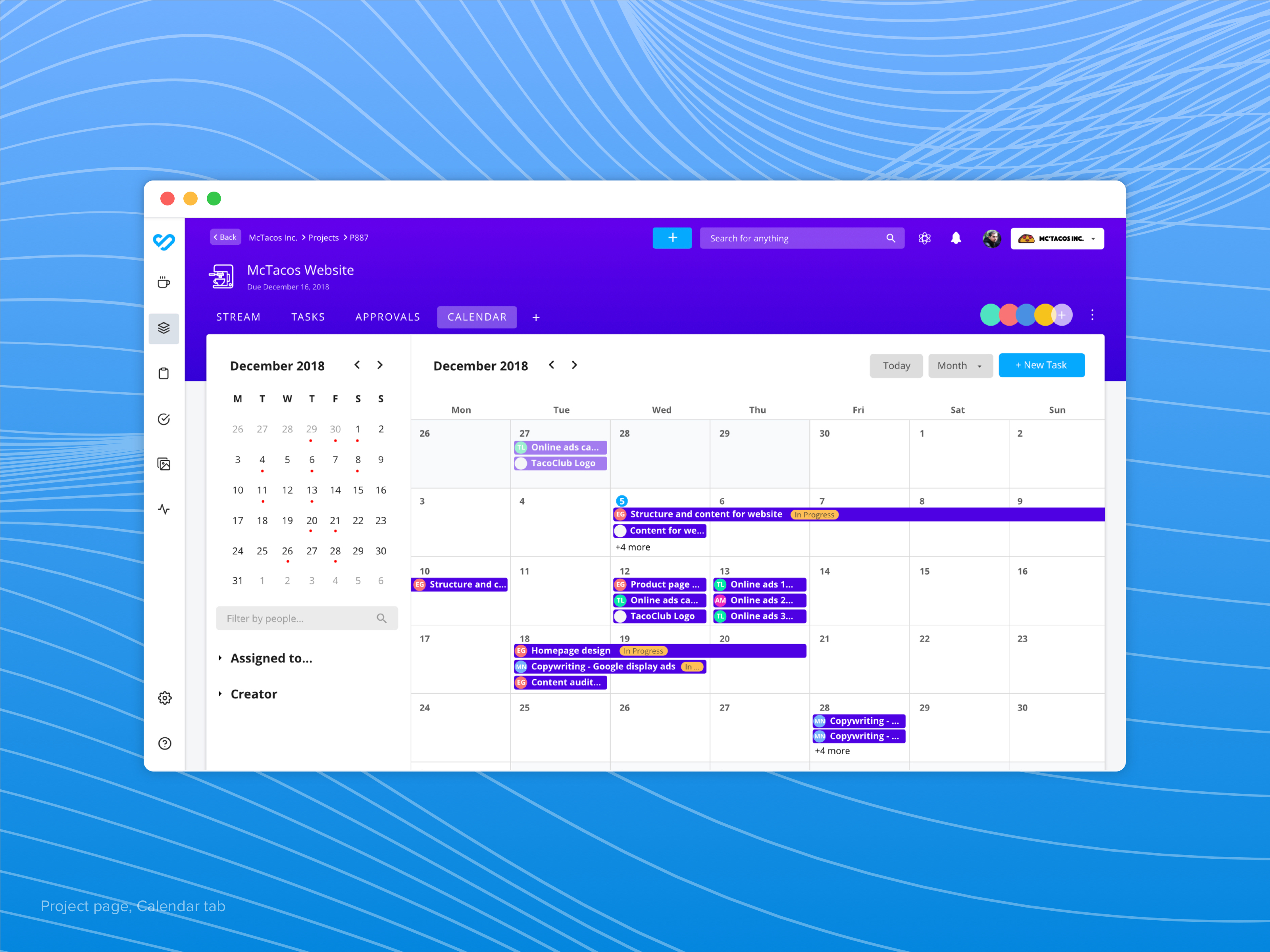
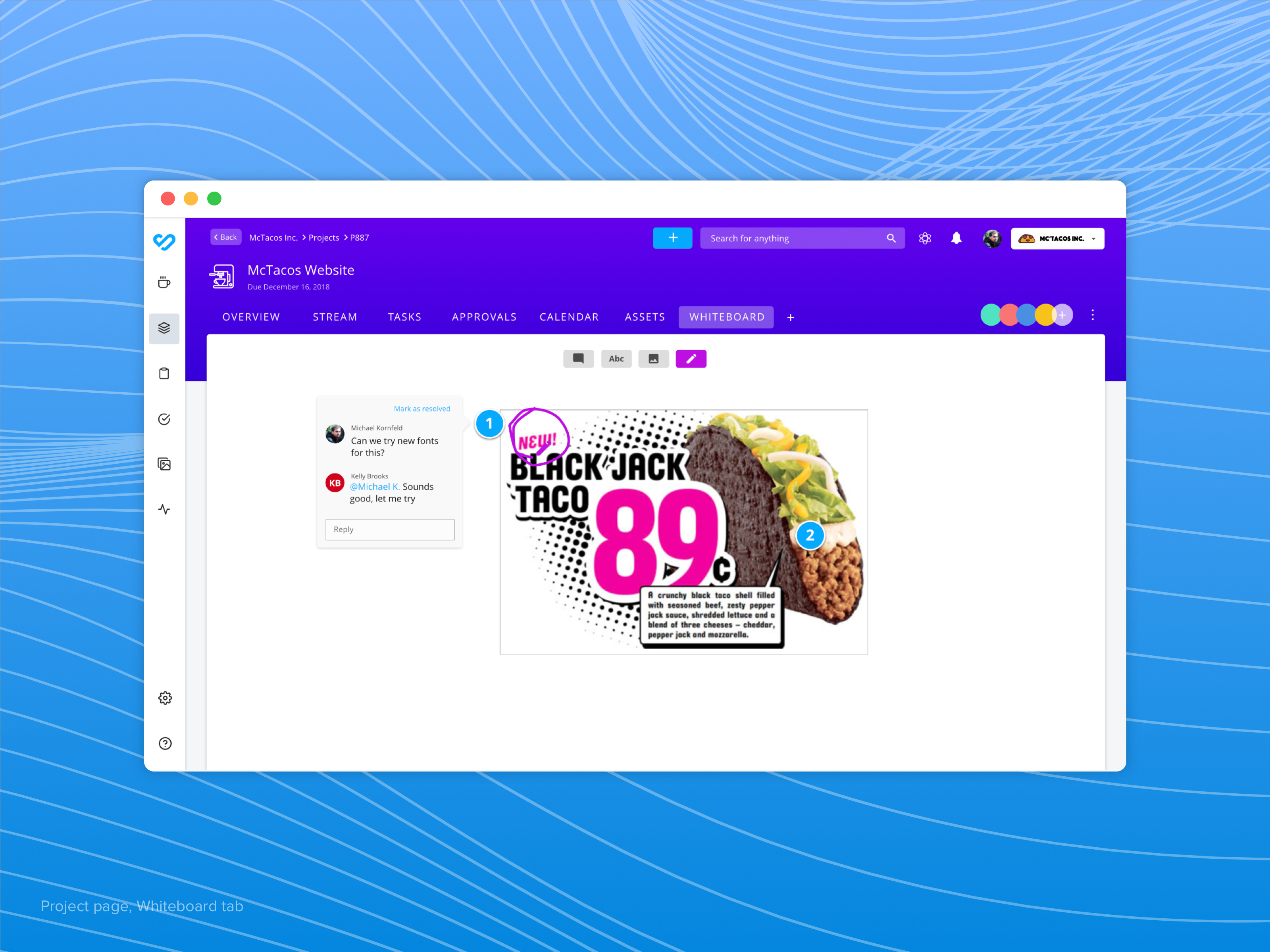
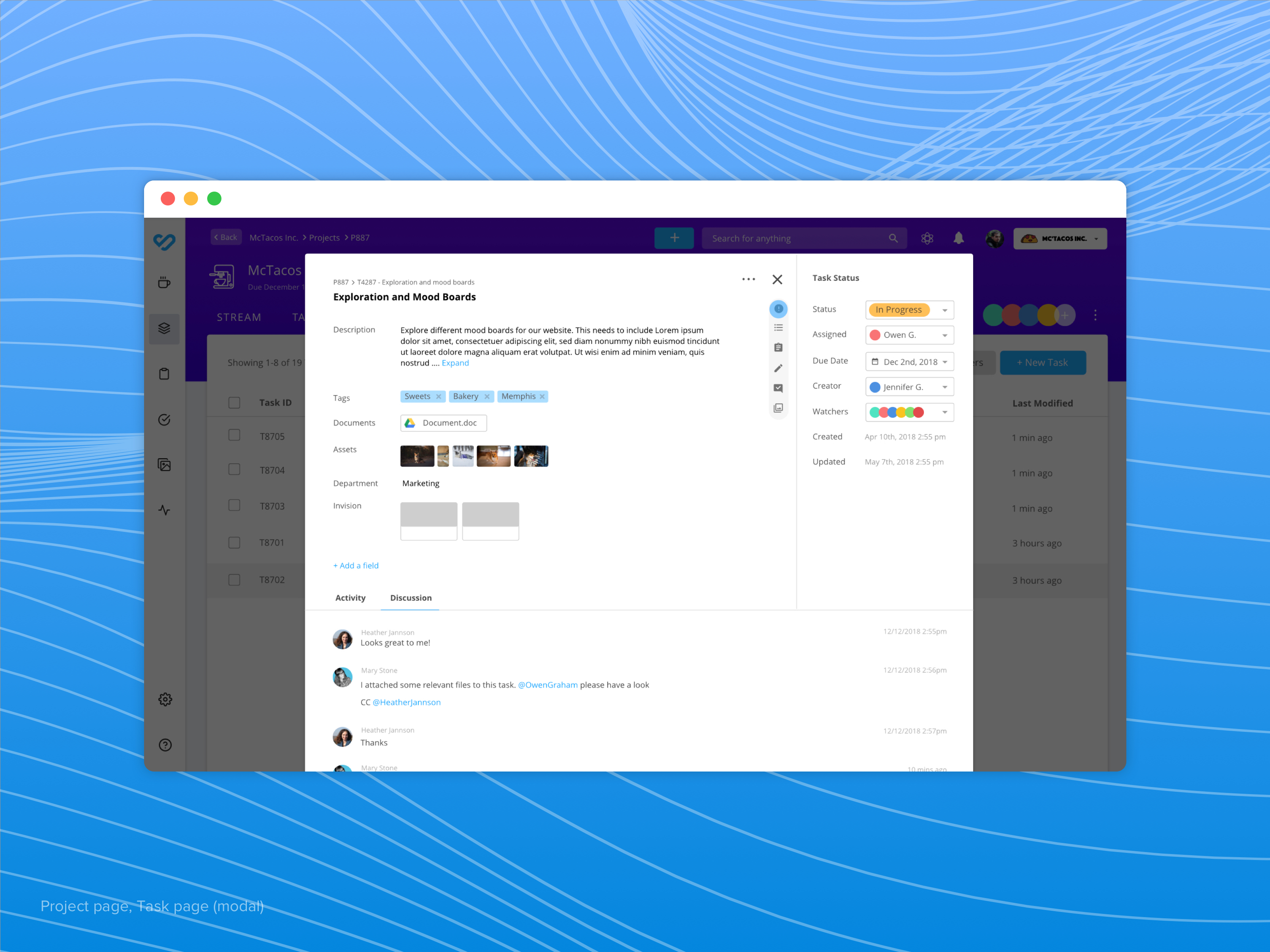
A website build ran hot on every axis: multiple stakeholders, dependent tasks, a calendar, approval chains, mockup annotation, and JIRA handoff to developers. An ad campaign needed almost none of that — asset management, batch approvals, and somewhere to put ideas. A copywriting project was often one person with no tasks at all, who needed a place to write and revise and nothing else.
One rigid model couldn't serve all three. Built for the website case, it buried the copywriter in scaffolding they'd never use. Built for the copywriter, it couldn't hold a real production project. Teams were working around the tool in both directions.
Context
Bynder is a digital asset management platform; Workstream is its task and workflow layer — briefs in, approvals out, brand assets delivered faster. I joined the Workstream team in 2017 and led design on the platform through [DATES]. This redesign came directly out of the research.
The approach
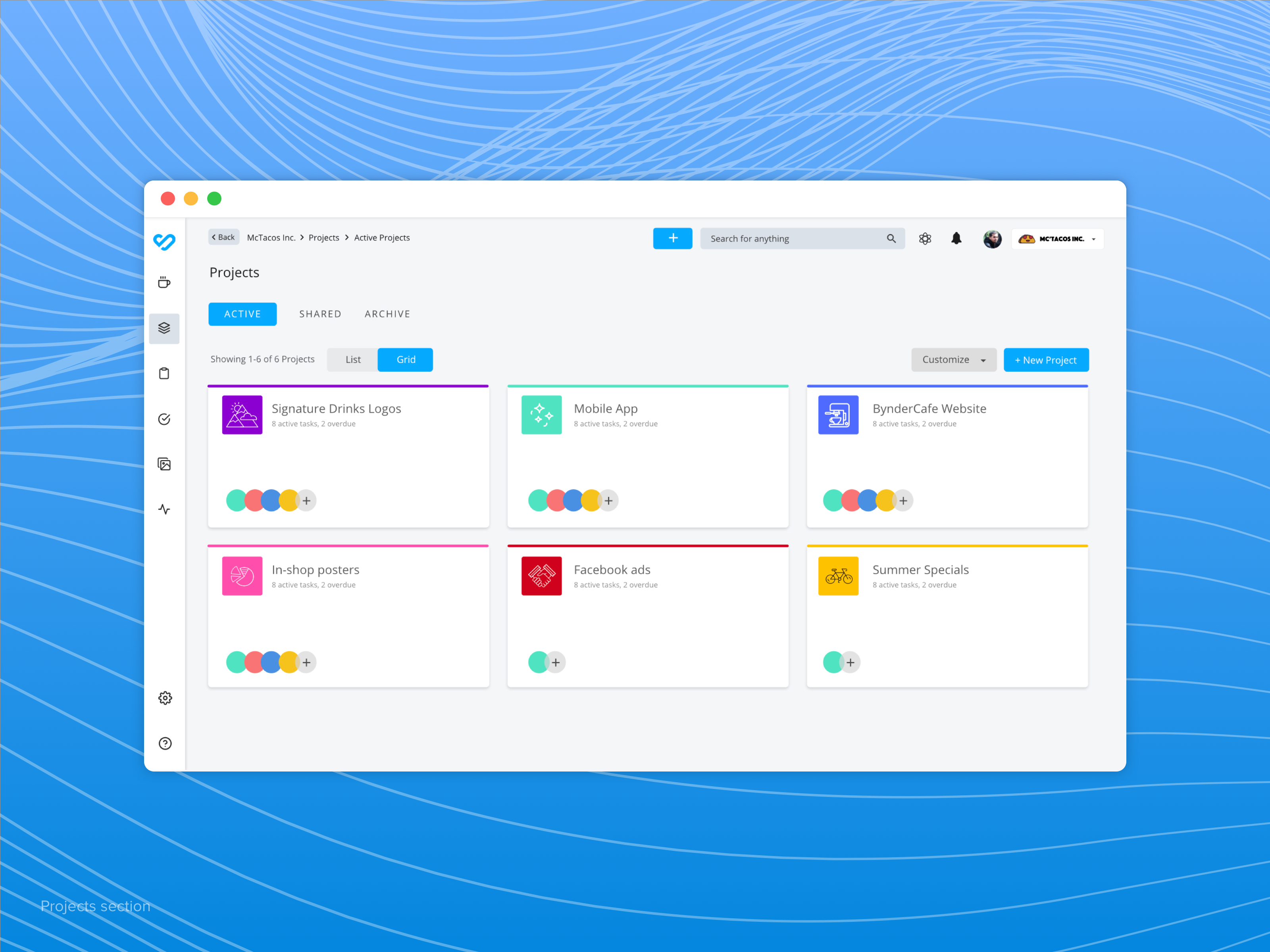
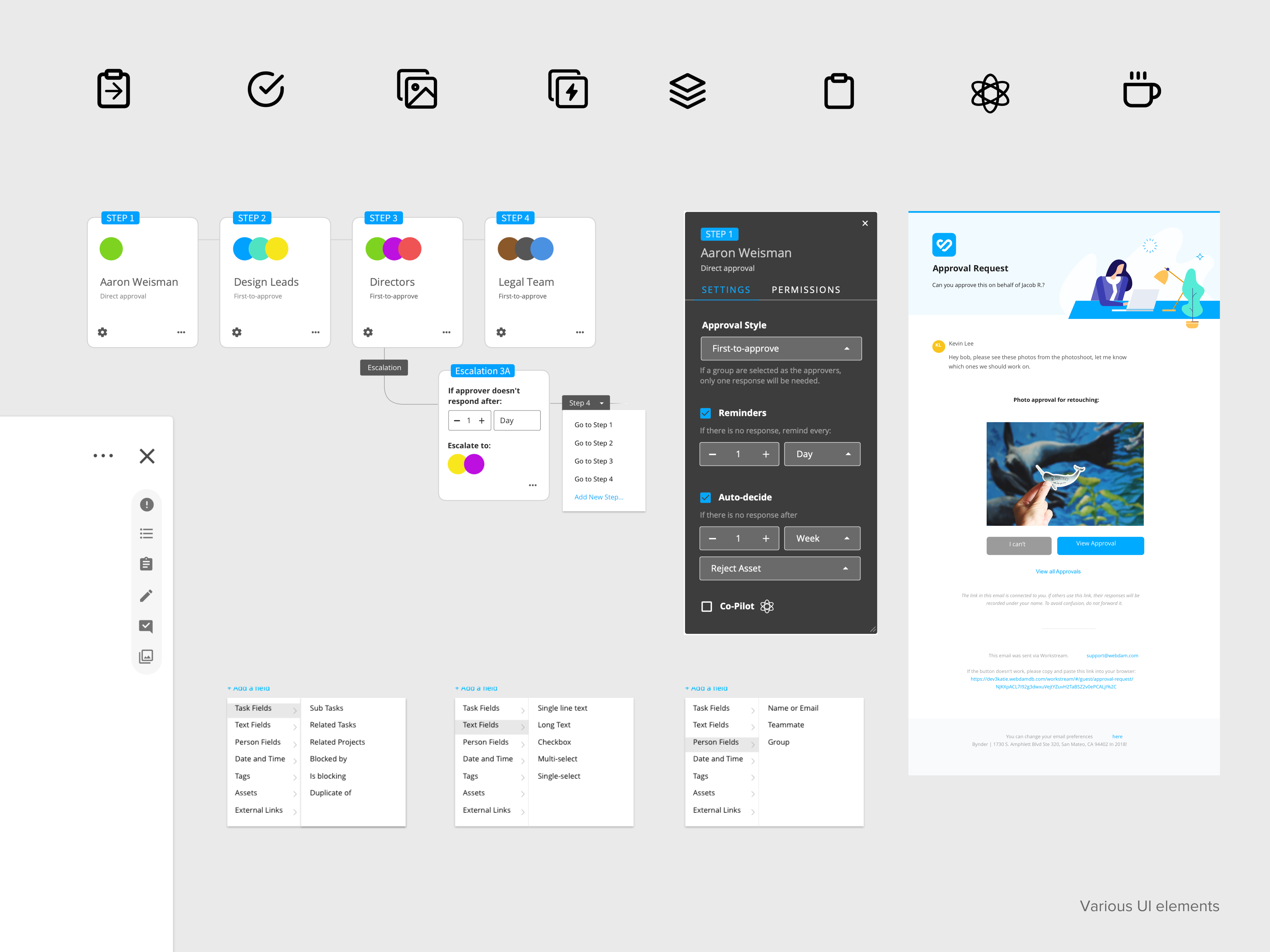
We stopped designing a task model and started designing a composition model. A project became a container you assemble: bring in the tools the work actually needs, hide the ones it doesn't. The copywriter gets a document and a stream. The website team turns on dependencies, calendar, annotations, and the JIRA bridge. Same product, three genuinely different shapes.
Three decisions made that work rather than turning it into a settings screen:
Full-size elements over compact ones. The old interface compressed everything to fit every case at once. Once a project only carried its own tools, each one could be full-sized — more capable and easier to use, because it no longer competed for room with features that project would never use.
Actions surfaced, not nested. Configurability usually leaks complexity into menus. We pushed commands out into the open instead, so the flexibility didn't cost discoverability.
Private by default. Projects stay solo until you invite collaborators. It sounds small, but it's what makes the one-person copywriting case feel native rather than like an empty version of a team tool.
Outcome
The vision was never built as a whole. It was deprioritized, and I'd still call it one of the highest-leverage things I've worked on.
It landed on leadership's focus areas for the next two years — machine learning, performance, integrations, and flexible UX — which meant the direction stopped being a design proposal and became part of how the org described its own roadmap. Inside the team it did the harder thing: five people who had been solving local problems now had one picture to argue against, and disagreements got faster because they were about the same thing.
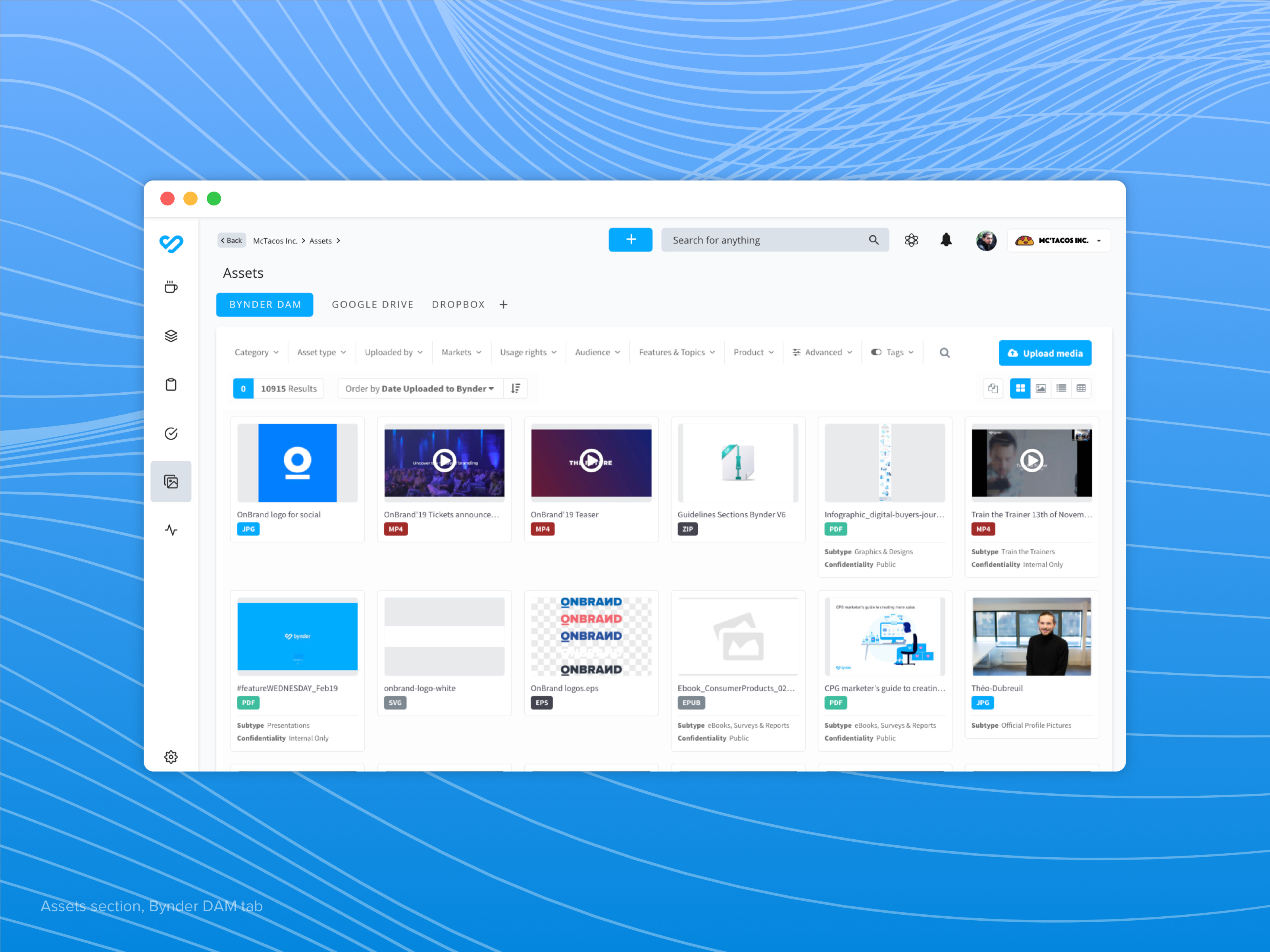
Pieces of it shipped almost immediately, because the model was decomposable by design. Approvals hub, proofing, point-comment, and custom fields all went into sprints with minimal modification, and components built afterward — the Assets sections among them — were designed against the vision rather than around it.
The result I care most about is the one I didn't design for: leadership started treating the Webdam design team as a strategic function rather than a delivery one, and began assigning us to key projects across the wider Bynder suite. The vision changed what the company thought design was for.
What I took from it
A vision that ships in pieces is worth more than one that waits for permission. This one was structured as archetypes and composable parts rather than a single monolithic redesign, and that's exactly why fragments of it could go straight into sprints while the whole thing sat deprioritized. Had I designed it as one indivisible future state, it would have died as a deck.
The broader lesson: when a system fights its users, the model underneath is usually wrong, not the interface. The temptation here was to keep tuning the task view. The actual fix was one level down, in what a project is. I hit the same shape at Sift years later at more scale — one framework, many verticals, flexing to reality instead of forcing it. This is where I learned to look there first.
Full case study available on request.